Key Takeaway
Wood windows offer natural beauty, full paint and stain customization, and repairability that no other frame material matches. All-wood products require ongoing exterior finish and moisture maintenance, while clad-wood versions cover the exterior in aluminum, fiberglass, or vinyl to sharply reduce upkeep. Energy performance depends on the full window assembly and NFRC-certified ratings, not the frame material alone.
Wood windows are a strong choice when natural beauty, paint or stain customization, and repairability matter to you, and when you’re ready for ongoing moisture control. Energy performance comes from a window’s certified ratings, not the frame material alone. Two ideas carry most of the weight here: the difference between all-wood and clad-wood products, and the difference between windows you can repair and windows you should replace.
What Counts as a Wood Window?
All-Wood vs. Clad-Wood Windows
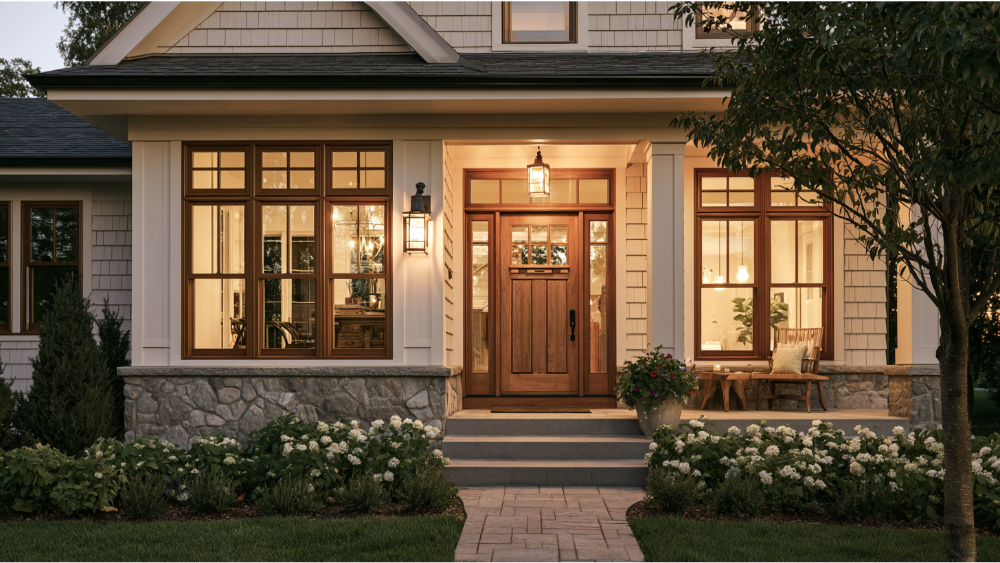
All-wood windows have exposed wood inside and out. You get the legendary grain and warmth, and you take on the full maintenance. Clad-wood windows keep the wood interior but cover the exterior with factory-applied aluminum, fiberglass, or vinyl that sheds weather and never needs repainting. Cladding cuts exterior upkeep sharply, but you still inspect sills, seals, and drainage at every opening.
Historic Windows vs. Wood-Look Products
Original sash is a separate category: often repairable, often architecturally significant. Modern vinyl, fiberglass, and composite windows finished in a wood-look color are a fourth category. These products don’t share the same maintenance needs, repairability, or moisture risk, so compare them in person before you commit.
Wood Windows: Pros and Cons at a Glance
| Strengths | Tradeoffs |
|---|---|
| Natural beauty and grain no finish fully imitates | Finish and moisture maintenance never really ends |
| Paint or stain in any color, plus custom shapes and designs | Sensitive to standing water and sustained humidity |
| Matches a period architectural style closely | Higher, more variable initial price |
| Damaged parts on wood windows are often repairable | Performance depends on the full assembly, not the wood |
Are Wood Windows Energy-Efficient?
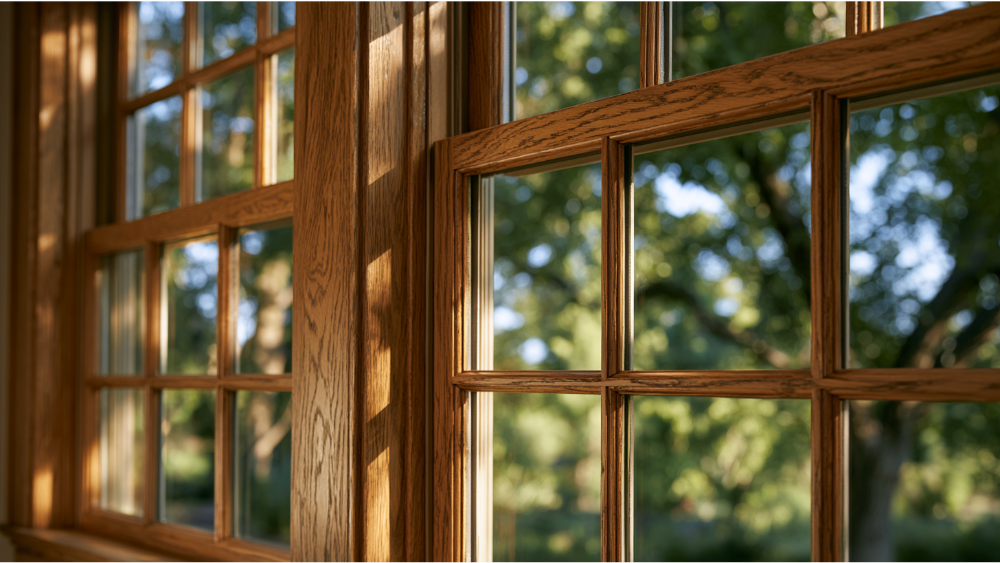
Wood insulates well as a frame material, but the frame is one piece of a system. The glass package, low-e coatings, gas fill, spacers, weatherstripping, operating style, and installation quality all impact what you feel in the room. The U.S. Department of Energy and ENERGY STAR® both advise comparing complete windows rather than assuming a material wins. Certification is technology-neutral: wood windows qualify only if that exact configuration meets the criteria for your climate zone, and the same holds for doors.
What the NFRC Label Tells You
- U-Factor: heat transfer through the window, usually 0.20 to 1.20. Lower is better.
- Solar Heat Gain Coefficient: how much solar heat gets in, on a 0 to 1 scale.
- Visible Transmittance: daylight passing through. Higher means more natural light.
- Air Leakage: air moving through the product. Lower is better.
ENERGY STAR® Version 7.0 criteria took effect October 23, 2023. Qualifying windows must show air leakage no greater than 0.3 cfm/ft², with maximum U-Factors from 0.22 in the Northern zone to 0.32 in the Southern zone. Certified windows and doors can cut heating and cooling costs by up to 13% on average nationwide versus non-certified products, and that is an average, not a promise for your house.
Wood Window Types: Single Hung, Double Hung, Casement, and the Rest of the Product Line
Most wood offerings cover the familiar window types, from a single hung to a bay or bow:
- Single hung and double hung: a single hung opens at the bottom sash only, while both sashes move on a double hung, which makes cleaning an upstairs double hung easy from inside.
- Casement and awning: a casement cranks open on a side hinge and seals tight against the frame. An awning hinges at the top, so you can leave an awning window open in light rain.
- Picture and geometric: fixed glass for views and daylight, including arches and angles cut to your design.
- Bay and bow: a bay projects in three flat planes, a bow curves through four or more sashes, and a bow usually means custom work rather than standard sizes.
Wood mills easily, so a sash profile can be shaped to an existing architectural style. The same window types appear in vinyl, fiberglass, and composite product lines, so wanting a casement, an awning, or a double hung rarely decides your material.
How Much Maintenance Do Wood Windows Really Need?
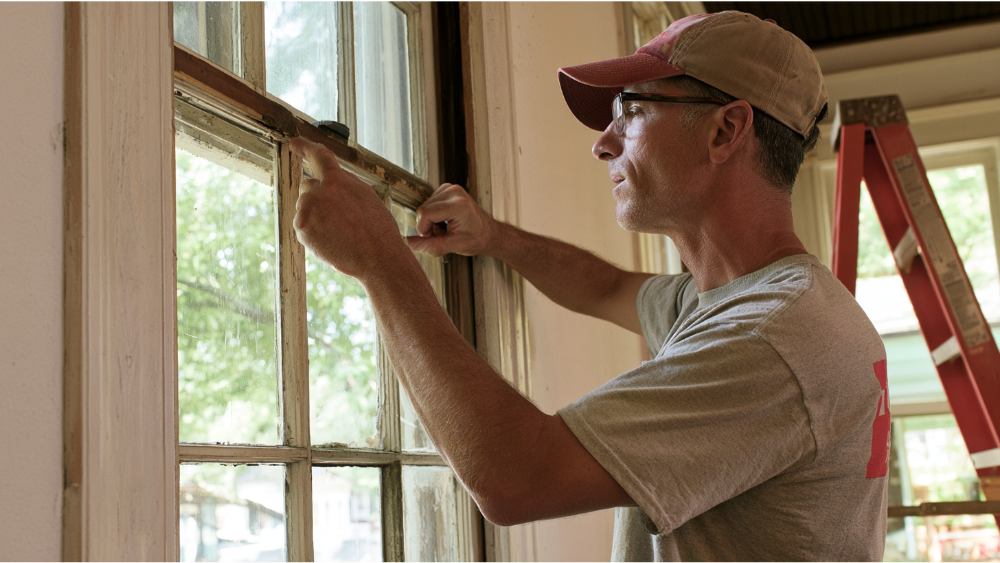
The National Park Service identifies moisture as the primary contributor to decay in wooden windows. Species matters too. Clear vertical-grain fir, pine, and cedar take finish differently, and a pine sash left bare on a west wall fails first. Watch these spots:
- Peeling or cracked exterior finish
- Failing or missing glazing putty
- Open joints where frame members meet
- Flat or poorly draining sills
- Condensation running into joinery
- Worn caulk, weatherstripping, or a stiff casement crank
There’s no universal repainting schedule; exposure, climate, and the finish decide. Clad products still need sill, seal, and drainage checks. Wood windows last decades with sound design, careful installation, and upkeep.
Should You Repair, Restore, or Replace?
| Usually repairable | Needs professional assessment | Replacement often appropriate |
|---|---|---|
| Failed finish, loose glazing compound, broken sash cords, worn hardware, air leakage around a sound frame, limited localized decay | Recurring condensation, partial sill decay, sash that sticks or won’t lock, drafts you can’t trace | Widespread rot, water intrusion that can’t be corrected, distorted frames, insect damage, windows that can’t be made safe or easy to open |
Peeling paint does not mean the wood underneath is gone. An in-person assessment should sort the repairable from the replaceable, covering paint, frame, sill, sash, glazing, and hardware before anyone recommends removing your windows.
Wood vs. Vinyl, Fiberglass, and Aluminum Windows
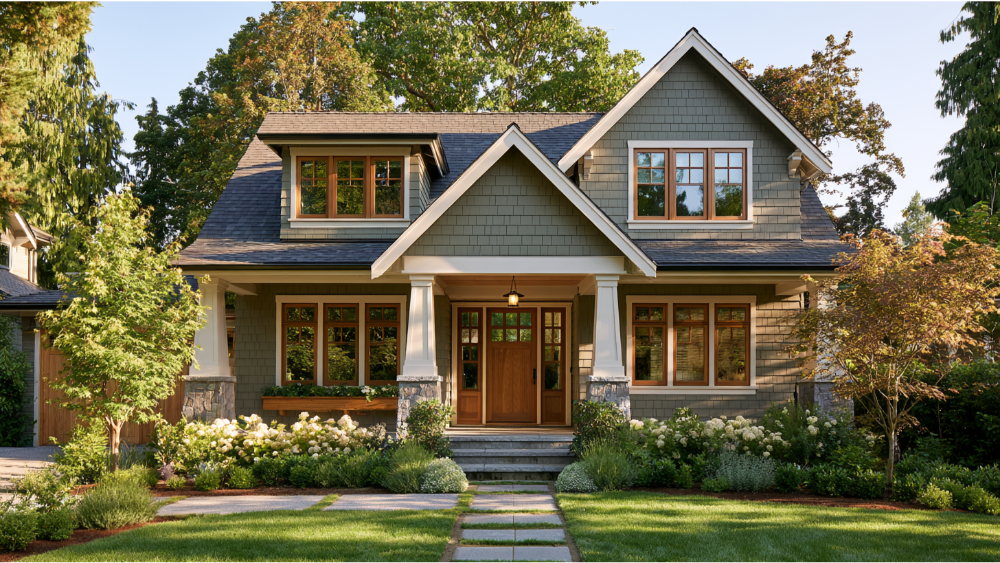
No material wins outright. Judge on beauty, design freedom, the maintenance you’ll tolerate, moisture resistance, NFRC-rated performance, warranty, and how long you’ll own the home. Vinyl and fiberglass windows ask less of you year to year. Aluminum frames are slim and strong but conduct heat unless thermally broken. If you love the look but not the upkeep, clad-wood products and wood-look vinyl or fiberglass windows exist for that reason. Anlin windows are the energy-efficient vinyl product line we represent factory-direct, backed by the Anlin Limited Double Lifetime Warranty covering vinyl, glass, hardware, and accidental glass breakage.
What About Wood Doors?
The same tradeoffs show up at your doors. Wood entry doors give you depth and natural beauty, and they want the same finish schedule as wood windows, especially on a west-facing opening with no overhang. Fiberglass doors molded with a wood grain hold a stained look with far less upkeep. Patio doors and sliding doors work hardest, since the sill takes foot traffic and runoff, so a door that won’t open smoothly usually points to the track or threshold. We install ProVia doors factory-direct and match the design to your windows, so doors and windows read as one architectural style.
What Professional Installation Should Include
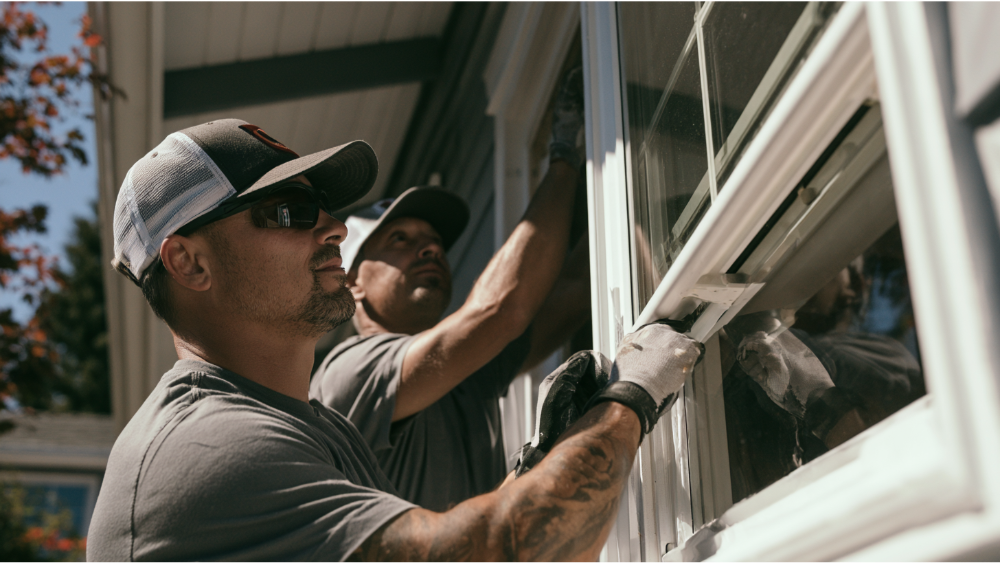
- Inspect the opening for hidden decay.
- Repair damaged framing first.
- Measure precisely, then set the windows square, level, and supported.
- Flash the opening so water drains outside.
- Insulate and air-seal around the frame.
- Finish interior and exterior surfaces.
- Clean up, then walk the finished work together.
We don’t cut corners on products, installation, or support. On commercial and HOA work, those steps often get written into specifications organized under CSI MasterFormat divisions, and the fundamentals don’t change for a single-family home. When two quotes differ sharply, the gap usually sits in the glass package, the installation method, and the warranty, so ask for itemized windows and labor. Every window and door we install carries our 10-year labor warranty, which is peace of mind long after the crew drives away.
Older Homes: Lead Safety and Preservation
EPA’s Renovation, Repair and Painting Rule generally covers paid work that disturbs painted surfaces in housing built before 1978, and window replacement is specifically covered. Preservation guidance favors repairing original windows where practical, and weatherstripping plus a low-e storm window can work when the sash is sound. Permit and energy requirements are adopted locally, so verify with your jurisdiction.
Is There a Federal Tax Credit for Windows in 2026?
No. The Section 25C Energy Efficient Home Improvement Credit is not available for property placed in service after December 31, 2025. State, utility, and local rebates may still exist, so check by location and date. We offer 0% APR financing through Synchrony Bank, HERO, and Home Run Financing, up to 25 months, with 100% project financing OAC and terms reviewed during your consultation.
Frequently Asked Questions
Let’s Find the Right Windows and Doors for Your Home
Start with the condition of what you have, then certified performance, then installation quality. We begin with your home, not a product pitch: factory-direct products, professional installation, the Anlin Limited Double Lifetime Warranty on Anlin windows plus our 10-year labor warranty, and 0% APR financing (OAC) discussed at your consultation. Get a Free Estimate, no commitment required, try our online window cost estimator, or call us at (916) 202-2282.
What are the downsides of wood windows?
Moisture sensitivity, ongoing finish maintenance, and a higher, more variable price than most vinyl windows. Exposure and climate decide how fast those tradeoffs show up.
How expensive are wood windows?
There’s no universal price. Cost swings with species, size, shape, glass package, custom profiles, and installation scope, so ask for an itemized estimate.
Are wooden windows any good?
Yes, when the beauty and repairability matter to you and you stay ahead of moisture. Judge performance by the NFRC label and ENERGY STAR® certification, not by the frame material, whether you choose a double hung or a casement.