Key Takeaway
A window mullion is the major structural member that joins or separates complete windows within a single opening, carrying load and maintaining the weather seal where two units meet. Unlike decorative grilles or muntins, mullions are built into the assembly and rarely removed without replacing the whole unit. Factory-mulled assemblies are tested as a system for air, water, and structural performance.
A window mullion is the major framing member that joins or separates complete windows inside a single opening. It is heavier than the thin bars crossing the glass panes because it carries structural load, providing rigid support where two windows meet and holding the weather seal tight. Those slimmer elements are muntins, grilles, or grids. The distinction matters more than it sounds.
Maybe you spotted a thick vertical divider in your living room window, saw “mullion” on an estimate, or you are choosing a replacement configuration and need to know what you are ordering. Here is how to tell what you are looking at, and what it means for your house.
What Are Window Mullions?
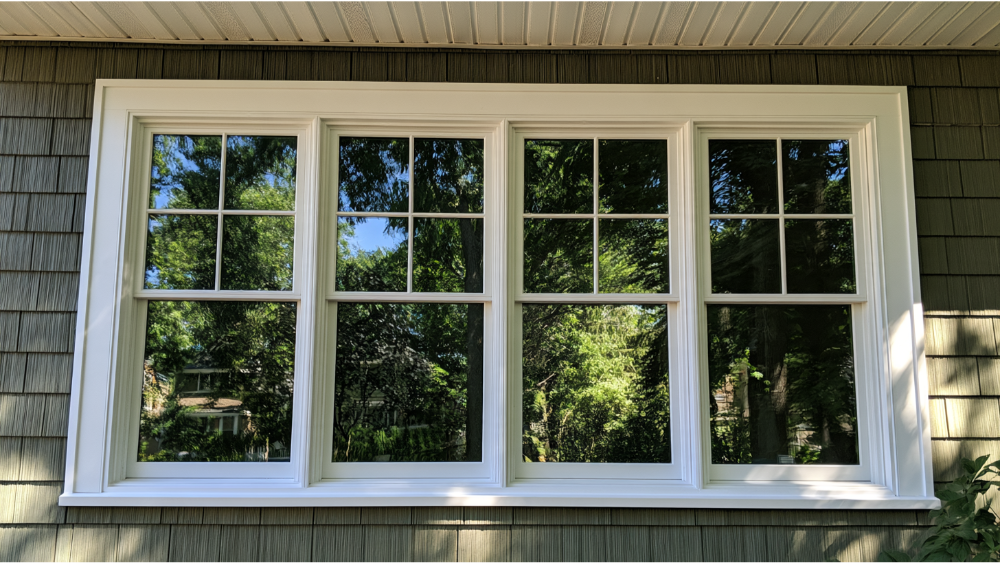
Industry glossaries, including Anlin’s window and door glossary and the NFRC consumer glossary, define a mullion as a major structural vertical or horizontal member between windows or sliding glass doors. Traditional architectural usage is narrower. It often reserves the word for vertical elements and calls the horizontal one a transom. That is why definitions conflict from one page to the next, and why two estimators can use the term slightly differently.
The material varies: wood, aluminum, vinyl, or fiberglass, depending on the window system. The job is the same either way. Support load across a wider opening and keep the seal tight where two windows join. Knowing the right word changes what gets ordered, what it costs, and what can be altered later.
Mullion vs. Muntin vs. Window Grids: The Simple Difference
Five terms cover almost everything a homeowner points at on a window.
| Term | What it is | Structural? | Where you see it |
|---|---|---|---|
| Mullion | Major member joining or separating complete windows | Usually yes | Between two windows in one opening |
| Muntin | Secondary bar dividing or holding glass panes in a sash | Sometimes | Inside a single sash |
| Grille / Grid | Decorative strip applied to or sealed between glass panes | No | Across the glass or inside the sealed unit |
| Transom | Horizontal member above a window or door | Usually yes | Above a door or stacked window |
| Meeting rail | Where two operable sashes overlap and lock | Part of the sash | Middle of a double hung or slider |
Two corrections, since the web gets these wrong constantly. Muntins are not always decorative: in a true divided light window, real muntins separate real glass panes. And mullions are not strictly vertical in modern usage. Tell an estimator “I think this is a structural mullion between two windows, not a decorative grille,” and you will get a faster answer and a more accurate price.
What Do Window Mullions Do?
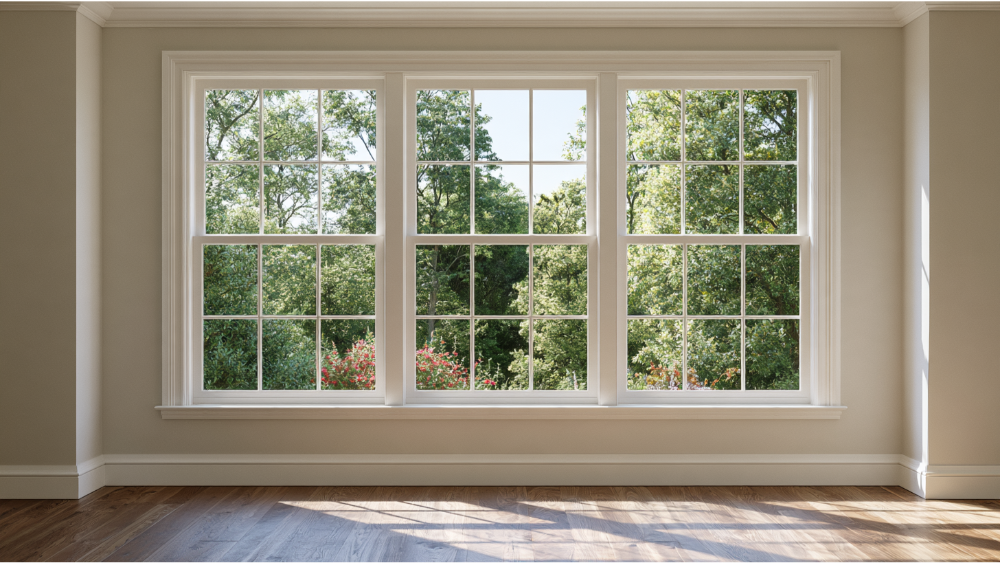
- Join or separate complete windows so several units read as one opening.
- Support structural load so a wide or tall configuration holds up under wind and building movement.
- Hold the seal line where windows meet, keeping air and water outside where they belong.
There is a design job too. Mullions break up large sheets of glass and set the rhythm of a façade, reading like slim columns across the wall. Grilles work at a smaller scale, dividing the view into smaller panes and throwing shadow lines that travel across floors and furniture as the sun moves. Get the proportion right and you add curb appeal without giving up comfort, efficiency, and durability.
Where You’ll Find Mullions Around the House
- Paired or triple window runs across living room walls.
- A picture window flanked by casements or sliders, where the other windows do the ventilating.
- Bay and bow configurations, where each angled unit meets the next.
- Stacked windows with a horizontal member, often a transom, between them.
- Window and door combinations, such as a slider with sidelights.
In every one of these, the mullion is doing real work. That is why it rarely moves without replacing the assembly.
What Does a “Mulled” Window Mean?
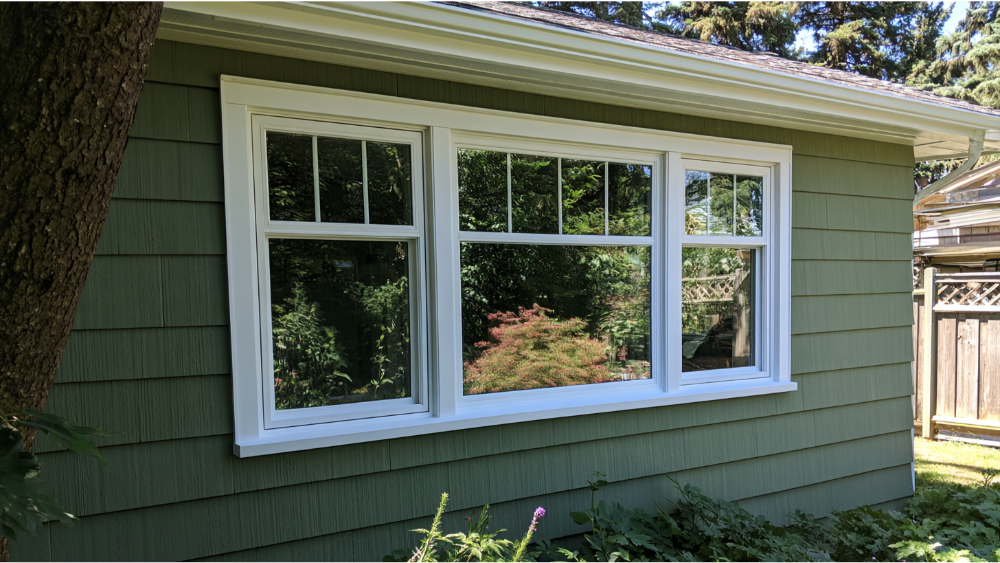
“Mulled” means two or more complete windows have been joined with mullion connectors into one combination assembly. One opening, several windows, one system.
Factory-mulled vs. field-mulled
Factory-mulled windows are joined and sealed in a controlled plant setting, with the connection built and tested as part of the product. Field-mulled windows are assembled on site, which puts far more weight on correct connectors, proper sealing, and following the manufacturer’s instructions exactly.
Mulled assemblies are rated as systems. AAMA 450-20 is the current performance rating method for air leakage, water resistance, and structural performance of mulled combination assemblies, and the North American Fenestration Standard governs tested and labeled products. A combined window should be selected and installed as a tested system, not improvised from unrelated parts.
Can Window Mullions Be Removed, Replaced, or Added?
Start by figuring out what you have.
- If the divider sits between two complete sashes or frames, treat it as structural. Cutting it changes how the assembly performs against wind and water. Not a weekend project.
- If it is a snap-in grille, an applied strip, or a bar sealed between the glass panes, it is decorative, and changing the look is easy.
- A failing structural mullion with rot, separation, or recurring leaks sometimes allows a targeted fix, but often the honest answer is replacing the assembly.
- In many factory windows the grille pattern lives inside the insulated glass unit, so changing styles means changing the glass.
Adding DIY Window Mullions (Decorative Only)
If you want the divided light look on clear glass, the path is simple. Measure the glass, decide how many panes you want, then cut lightweight plastic PVC strips, thin wood trim, or stock molding to length and attach them with double-sided tape or clips. A horizontal bar with two inner vertical pieces tends to fit a standard sash well. Skip heavy wood panels, since tape will not hold the weight. The look is achieved with light pieces, nothing structural. Painting them prior to installation gives a clean edge, and white usually reads best against a vinyl frame. Materials for one small window can run under $10, so price is rarely the hard part.
Know the trade-offs. Tape can fail under heat and sun, cleaning around every strip gets fussier, and nothing you apply should interfere with the insulated glass unit, its seal, or the window’s operation. If the windows are still under warranty, check the coverage page on the manufacturer’s website before you stick molding to anything.
Do Mullions, Grilles, and Glass Panes Affect Energy Efficiency and Natural Light?
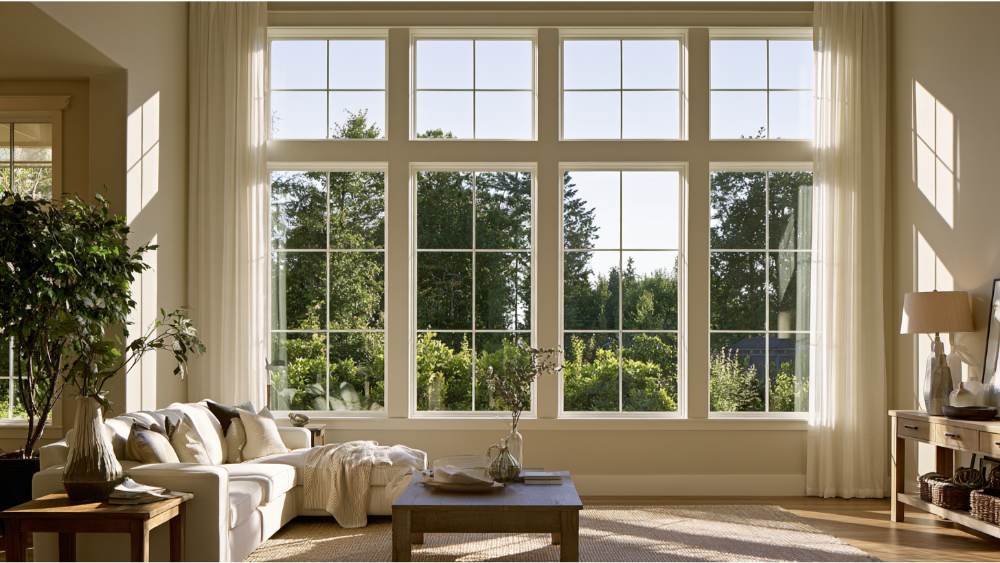
There is no universal yes or no, despite what some companies suggest. More frame area and less exposed glass shifts the numbers, so the reliable move is comparing the NFRC whole-window U-factor and SHGC for the exact configuration being quoted. Whole-window ratings include glazing, frame, and spacers, and they are generally less favorable than a center-of-glass figure.
ENERGY STAR® Version 7.0 residential criteria took effect October 23, 2023 and vary by climate zone:
| Climate zone | Max U-factor | SHGC |
|---|---|---|
| Northern | 0.22 | At least 0.17 |
| North-Central | 0.25 | No more than 0.40 |
| South-Central | 0.28 | No more than 0.23 |
| Southern | 0.32 | No more than 0.23 |
Seals matter just as much, because a weak joint shows up as a draft in winter. FGIA notes a residential product should not leak more than 0.3 cfm per square foot of product area under the referenced test, which is why the joints in a mulled assembly deserve attention. Anlin lists grille profiles including 5/8-inch flat, 5/8-inch sculptured, and 1-inch sculptured, in patterns such as Colonial, Perimeter, and Queen Anne. Availability varies by series, so we confirm current options during your free estimate.
Code and Safety: Egress, Labeling, and Historic Homes
Under the 2024 International Building Code, qualifying exterior windows and sliding doors are expected to be tested and labeled to the referenced fenestration standard. What is enforceable depends on the code edition your jurisdiction has adopted and any local amendments.
Egress deserves a closer look. Large windows can look enormous and still have an operable section too small to climb out of. Model-code minimums are 5.7 square feet of net clear opening, 24 inches of height, 20 inches of width, and no more than 44 inches from the floor to the bottom of the opening, measured through normal operation rather than across the full assembly. In historic districts, the National Park Service notes that small changes in muntin dimensions visibly alter a window’s character and the history your home carries, so check local rules before you purchase.
Questions to Ask Before You Purchase a Mulled Replacement Window

- Is this divider structural, or a decorative grille?
- Is the assembly factory-mulled or field-mulled?
- Is this exact combination of windows tested and labeled?
- What are the NFRC whole-window U-factor and SHGC for this configuration?
- Does the operable window meet egress requirements where I live?
- Does the quoted price cover the full assembly, including connectors, molding, and trim?
Frequently Asked Questions
What is the difference between a mullion and a muntin
A mullion sits between complete windows. A muntin sits inside a sash, dividing or holding individual glass panes. It is a common mix-up, but on an estimate the difference changes what you are buying.
Can you buy mullions for windows?
You can purchase decorative grille kits, PVC strips, and paintable stock molding for a divided light look. Structural mullions and their connectors come as part of a tested window assembly, not as a standalone retail part.
What are window grids called?
Grilles, grids, muntins, or simulated divided lites, depending on construction. Bars sealed inside the insulated unit are usually called grilles between glass.
Not Sure What You’re Looking At? Get a Free Estimate
Some things deserve a professional look: movement where two windows meet, visible gaps, a recurring draft or water at the divider, deteriorated wood, or plain uncertainty about whether a divider is structural.
We install factory-direct Anlin windows backed by the Anlin Limited Double Lifetime Warranty, which covers vinyl, glass, hardware, and accidental glass breakage, plus our own 10-year labor warranty on the installation. Products are Energy Star® certified, and 0% APR financing is available with terms reviewed during your consultation (OAC). Our support does not end when the last window goes in.
Start with our no-obligation online window cost estimator, or call (916) 202-2282. Get a Free Estimate, no commitment required. We serve homeowners across Northern California.