Key Takeaway
A door with a window is called a glazed door, and the glass panel set inside the swinging slab is a door lite. Under California’s 2025 Energy Code, any door where glass covers 25% or more of the door area is rated like a window for energy performance. Lite size, glass type, orientation, and installation quality all determine how well a glazed door balances light, privacy, and efficiency.
A door with a window built into it is called a glazed door, and the glass panel inside the slab is a door lite. Glass brings daylight into dark entryways and lets you see who is at the entrance before you open up. If you’re shopping for exterior doors with windows, here’s how to choose the right amount and type of glass before you buy.
What Is a Door With a Window Called?
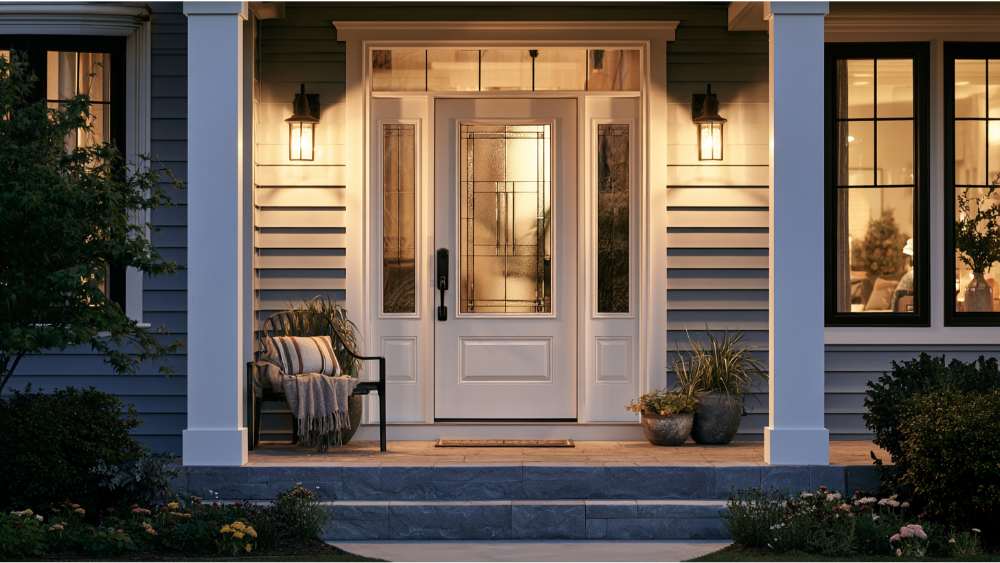
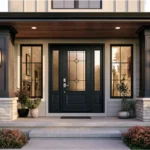
A glazed door is an exterior door with glass in it. A door lite is the glass unit set inside the moving slab. Glazing is the glass itself.
California’s 2025 Energy Code draws a precise line. When glass covers 25% or more of the door area, the door counts as a fenestration product and is rated like windows. Below 25%, it’s generally treated as an opaque door.
Parts of a Glazed Entry Door
- Door lite: glass inside the slab that swings with the door.
- Sidelite: a narrow fixed panel beside the door, adding light without more glass in the slab.
- Transom: a glazed panel above the door that lands light well above sightlines.
- Divided lites and grids: internal, external, or simulated bars over one insulating glass unit.
- Venting lite: a small window in the slab that opens for airflow. French and sliding patio doors are the full-glass options when you want a wide-open view.
Why Buy Exterior Doors With Windows?
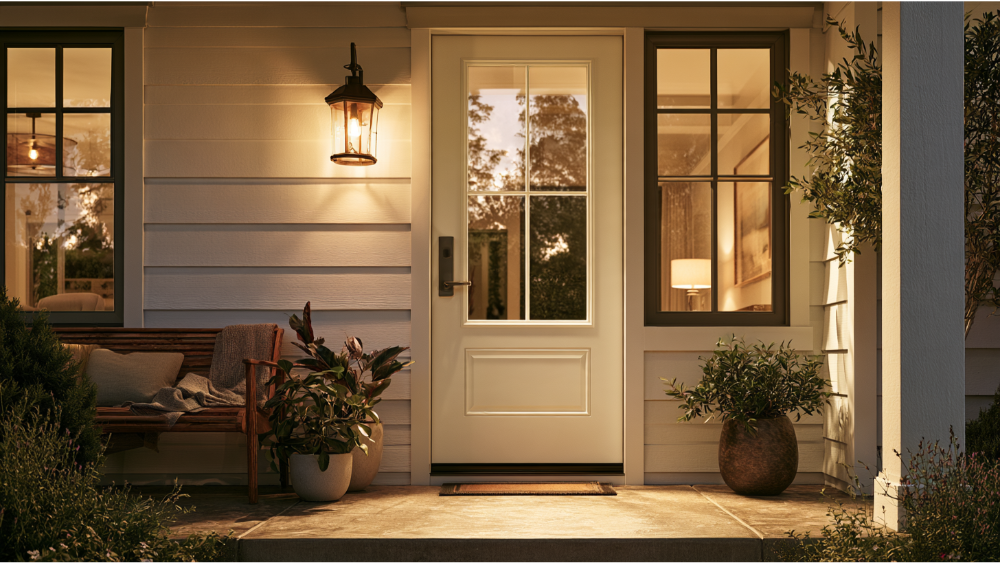
Front doors have to look right and work hard at the same time. Glass does both.
- Natural light in entryways and hallways that have no windows of their own
- A view of who is outside before you open the door
- Curb appeal from the street
- Architectural character that fits the rest of the house
The trade-off is real. More glass means more light, and more to manage for privacy, solar heat, and energy performance.
Door With Window Styles: How Much Glass Do You Need?
Match the glass to how exposed your entrance is. Front doors facing a sidewalk need a different answer than one under a deep covered porch.
| Lite Size | Daylight | Privacy | Best For |
|---|---|---|---|
| Small upper lite | Low | Highest | Street-facing entries |
| Quarter-lite | Moderate | High | Light with minimal exposure |
| Half-lite | Good | Moderate | The balanced, popular choice |
| Three-quarter-lite | High | Lower | Shaded entries, brighter foyer |
| Full-lite | Maximum | Lowest | Covered entries with privacy glass |
Glass insulates less than an insulated door panel, so the more you add, the more the glazing package matters.
Explore Your Door Glass Options
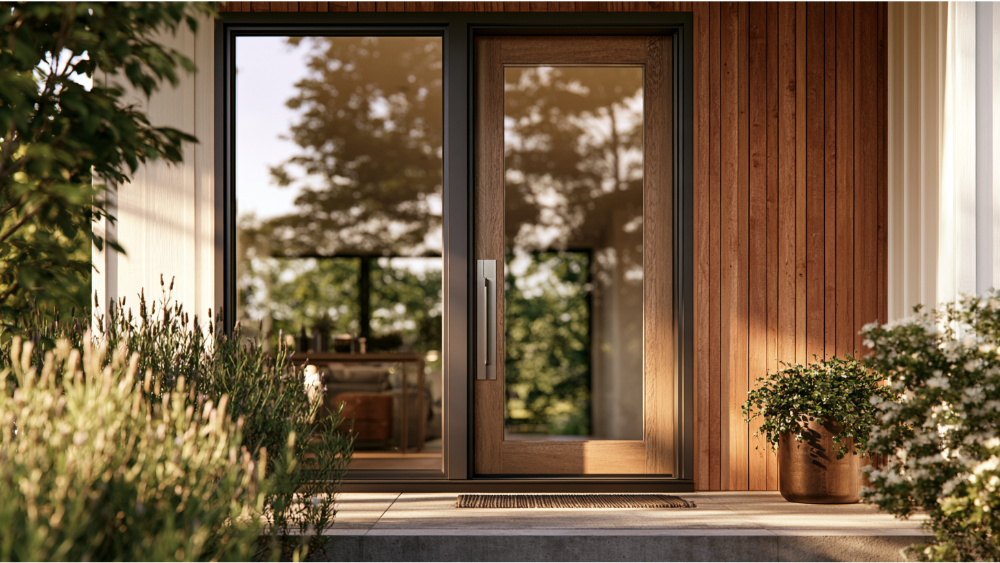
- Clear glass: maximum daylight, least privacy. It fits sheltered entries or a door with window glass set above eye level.
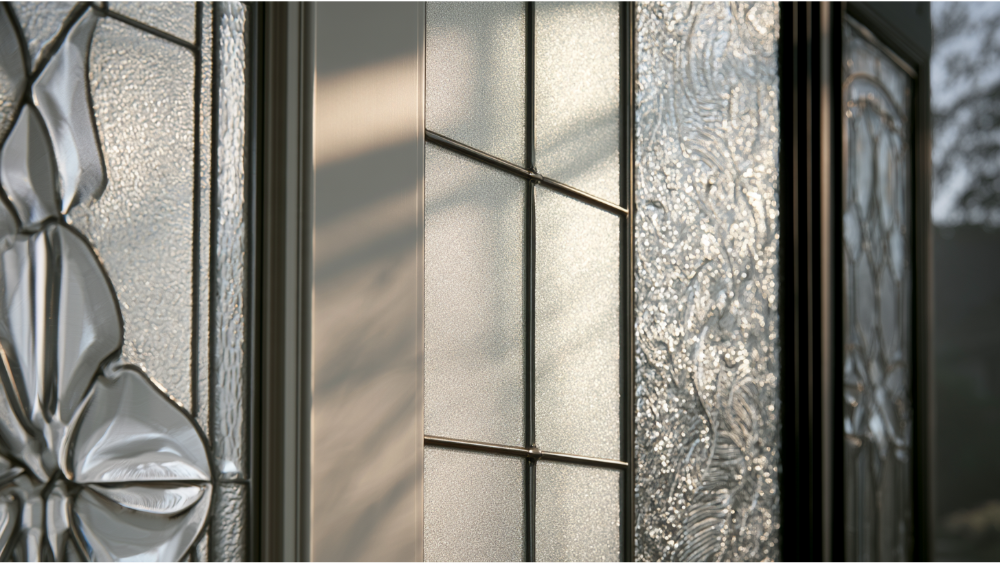
- Privacy, frosted, and textured glass: light passes through, detail doesn’t. Obscurity comes in levels, and at night a lit interior makes silhouettes easier to read from outside, so view a sample lit from behind before you buy.
- Decorative and divided-lite glass: caming, grids, and custom shapes let front doors match the home’s architecture.
- Low-E and insulated packages: double- or triple-pane units, argon fill, and Low-E coatings cut heat transfer and UV fading. We’ll explore the ProVia glass options available for your door during your free consultation.
Are Front Doors With Windows Secure?
Safety glazing and security glazing are not the same thing. Tempered or laminated glass reduces injury if it breaks. Forced-entry resistance requires glazing tested for that purpose. Security is a system: the slab, the frame and strike plate, the deadbolt, glass placed away from the lock, and correct installation. A strong door in a weak frame is still a weak entrance.
Does Door Glass Have to Be Tempered?
Generally, yes. Under the 2025 California Building Code, Chapter 24, glass in fixed or operable panels of swinging, sliding, and bifold doors sits in a hazardous location and requires safety glazing. Exceptions include openings a 3-inch sphere cannot pass through.
The same rules apply to glazing beside a door when its nearest vertical edge falls within a 24-inch arc of the door and its bottom edge sits less than 60 inches above the floor. Safety glazing must meet the applicable CPSC or ANSI impact standard and be permanently labeled. Manufactured exterior doors ship with compliant glazing included, so look for the etched mark in the corner.
Are Doors With Windows Energy-Efficient?
They can be. Judge the whole door system, not the words “double-pane.”
Read the NFRC Label
NFRC ratings cover the whole product, and the same label appears on windows, so you can compare directly. U-factor: lower insulates better. SHGC: lower blocks more solar heat. Visible Transmittance: higher means more daylight. Air Leakage: lower is tighter.
ENERGY STAR® Criteria by Glass Amount
Under Version 7.0, an opaque swinging door maxes out at 0.17 U-factor. Half-lite or less: 0.23 U-factor and 0.23 SHGC. More than half-lite varies by region, generally 0.26 to 0.28. Air leakage limits are 0.5 cfm/ft² for swinging doors and 0.3 cfm/ft² for sliding doors.
Even top-rated exterior doors underperform if the threshold, weatherstripping, or flashing is wrong. Precision installation matters as much as the product you buy.
What Northern California Homeowners Should Know
- Title 24 treats a door with 25% or more glass as fenestration, so whole-unit U-factor and SHGC may apply.
- California has 16 climate zones, and the CEC advises confirming yours by address. For a project confirmed in Zone 12, the 2025 prescriptive maximums are U-0.27 and SHGC 0.23, with opaque doors at U-0.20.
- West- and south-facing front doors take heavy afternoon sun, so SHGC carries real weight.
- Homes in designated wildfire areas may face separate WUI glazing provisions. Confirm with your building department and the Office of the State Fire Marshal.
Understanding regional codes, energy standards, and climate is part of how we spec every window and door project.
Add Glass to an Existing Door, or Replace It?
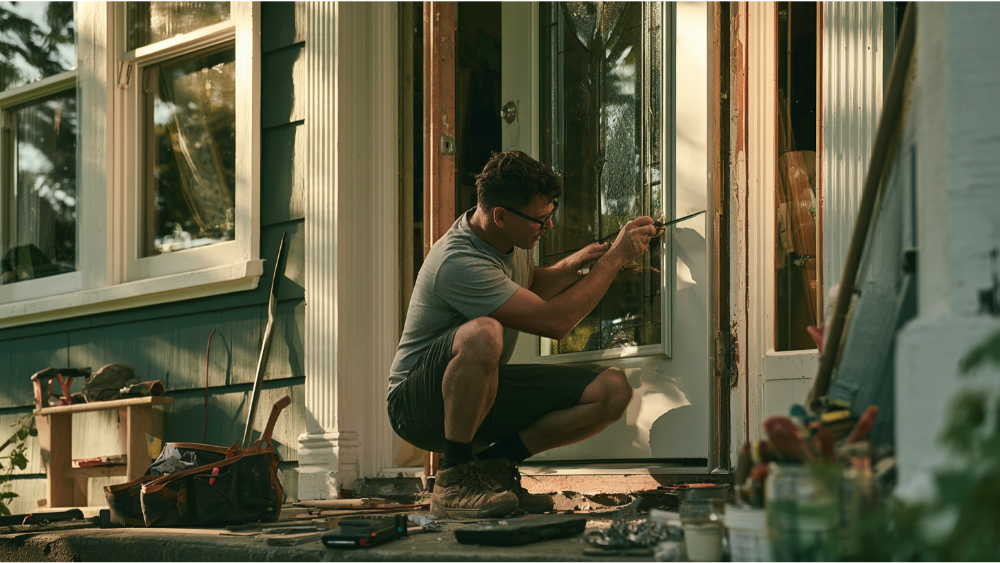
A slab-only swap can work if the frame, threshold, and jamb are sound and the door closes cleanly. Standard sizes are a starting point, but measurements should be verified before you buy. Replace the full system when there’s air or water leakage, rot, or racking, or when you’re adding sidelites, a transom, or a custom size. Cutting a lite into an existing slab can affect brand warranty coverage and rarely seals like a factory-built door.
Before You Buy: Quick Checklist
- Daylight and privacy needs, day and night
- Door orientation and sun exposure
- Safety-glazing label on the glass
- NFRC U-factor and SHGC for the unit
- ENERGY STAR® certification for the exact configuration ordered
- Frame, threshold, and weatherstripping condition
- Hardware and deadbolt quality
- Brand product warranty, labor warranty, and who performs the installation
Frequently Asked Question
What is it called when a door has a window?
A glazed door. The glass inside the slab is a door lite. Sidelites sit beside it, transoms above.
Are there exterior doors with windows that open?
Yes. Venting lites open for airflow, and French and sliding patio doors offer full-glass options. Ask about screens and hardware operation before you buy.
How much does a door with a window cost?
There’s no fixed price. Material, lite size, glass package, hardware, and installation scope all move the number. Request a free, no-obligation estimate and ask about 0% APR financing, up to 25 months, with 100% project financing OAC. Terms are reviewed during your consultation.
Can glass be added to a solid door?
Sometimes, with a retrofit lite kit. It has to use code-compliant safety glazing and can void the brand warranty.
Let’s Get Your New Entry Door Started
We’ll help you explore ProVia configurations, confirm what your address requires, and handle installation with full cleanup afterward. Factory-direct products from the brands we represent, a 10-year labor warranty, and support that doesn’t end at the final walkthrough. Whether you want front doors with windows or new windows throughout the house, Get a Free Estimate, no commitment required, or call (916) 202-2282. Our online cost estimator is an easy place to start. Serving the Greater Sacramento area and Bay Area from 5037 College Oak Dr STE A, Sacramento, CA 95841.
{“@context”:”https://schema.org”,”@type”:”FAQPage”,”mainEntity”:[{“@type”:”Question”,”name”:”What is it called when a door has a window?”,”acceptedAnswer”:{“@type”:”Answer”,”text”:”A glazed door. The glass inside the slab is a door lite. Sidelites sit beside it, transoms above.”}},{“@type”:”Question”,”name”:”Are there exterior doors with windows that open?”,”acceptedAnswer”:{“@type”:”Answer”,”text”:”Yes. Venting lites open for airflow, and French and sliding patio doors offer full-glass options. Ask about screens and hardware operation before you buy.”}},{“@type”:”Question”,”name”:”How much does a door with a window cost?”,”acceptedAnswer”:{“@type”:”Answer”,”text”:”There’s no fixed price. Material, lite size, glass package, hardware, and installation scope all move the number. Request a free, no-obligation estimate and ask about 0% APR financing, up to 25 months, with 100% project financing OAC. Terms are reviewed during your consultation.”}},{“@type”:”Question”,”name”:”Can glass be added to a solid door?”,”acceptedAnswer”:{“@type”:”Answer”,”text”:”Sometimes, with a retrofit lite kit. It has to use code-compliant safety glazing and can void the brand warranty.”}}]}