Key Takeaway
Energy star windows are independently tested products that meet EPA energy performance thresholds for your specific climate zone, verified through NFRC ratings on U-factor, SHGC, and air leakage. The current Version 7.0 standard requires U-factors as low as 0.22 in Northern zones. The certification covers the full window assembly, and professional installation is equally critical to achieving the efficiency you paid for.
ENERGY STAR windows are windows that have been independently tested and rated by the National Fenestration Rating Council (NFRC) and meet the U.S. Environmental Protection Agency (EPA) energy performance limits for the climate zone where they’ll be installed. The label isn’t a product type or a brand. It’s a pass/fail mark based on measured numbers, and the thresholds change depending on where you live.
If your windows are drafty and your bills keep climbing, you’re in the right place. This guide is for homeowners comparing replacement windows quotes who want to know what the label actually guarantees, what it doesn’t, and how to verify it before signing anything. Three ideas carry the whole article: ENERGY STAR is the standard, NFRC is the measurement, and installation is the performance you actually feel in your living room.
What are ENERGY STAR windows?
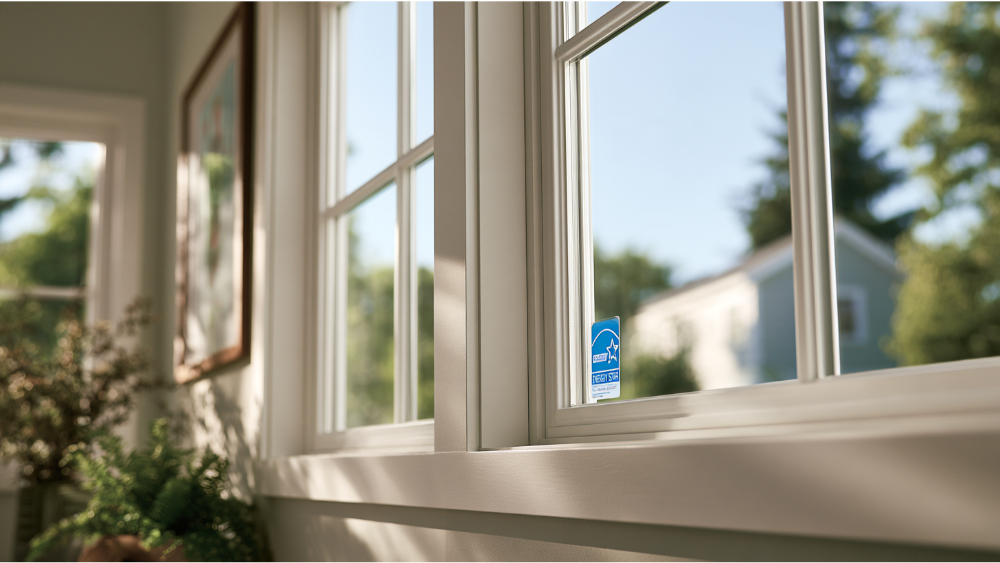
An ENERGY STAR window is a window whose tested energy performance meets EPA thresholds for a specific climate zone. The blue label is a government-backed efficiency mark administered by the Environmental Protection Agency, awarded to products that hit those numbers as part of a program designed to cut energy use and greenhouse gas emissions nationwide.
That’s different from how most older windows were built. Single pane windows rely on one layer of glass and whatever ambient air sits against it, which is why those windows feel cold in January and radiate heat in August. A certified window is engineered as a sealed system, and how well the window insulates is measured, not assumed.
Here’s the part homeowners often miss: certification applies to the whole window assembly, not the glass alone. The glass, the frame, the spacer that separates the panes, and the hardware are all tested together. A good pane of glass bolted into a leaky frame doesn’t earn the label, and shouldn’t.
What makes a window ENERGY STAR certified?
Three things have to line up before a product can receive ENERGY STAR certification:
- The window is made by a manufacturer that’s an ENERGY STAR partner.
- The product is independently tested, certified, and verified through the NFRC.
- Those NFRC ratings meet the EPA’s energy efficient certification requirements for the applicable climate zone.
The distinction people trip over: NFRC measures, ENERGY STAR sets the pass/fail line. NFRC doesn’t decide whether a window is “good enough.” It produces standardized numbers so you can compare any two windows fairly. The EPA then draws the line a product has to clear, and those strict energy efficiency standards are what separate ENERGY STAR qualified windows from everything else on the showroom floor.
Two more details worth knowing before you shop. Certification is based on the specification in effect on the product’s date of manufacture, so a window certified years ago was judged against the standard in force then. And a window can qualify in one climate zone and fail in another. Same product, different answer.
Configuration matters just as much. Within a single product line, the glass package, the low-E coating, the gas fill, the grids, and even the operating style can change the rating. “That line is ENERGY STAR” is not the same statement as “the window you’re ordering is certified for your zone.”
ENERGY STAR Version 7.0 energy performance requirements by climate zone
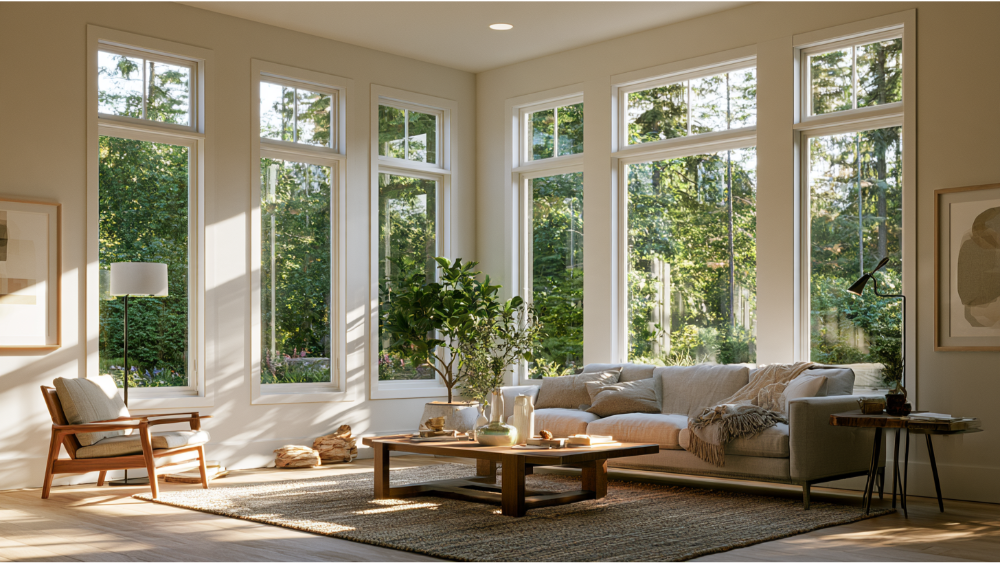
The current standard is ENERGY STAR Residential Windows, Doors, and Skylights Version 7.0, effective October 23, 2023. Here are the prescriptive window requirements by zone:
| Climate zone | Maximum U-factor | SHGC requirement |
|---|---|---|
| Northern | ≤ 0.22 | ≥ 0.17 |
| North-Central | ≤ 0.25 | ≤ 0.40 |
| South-Central | ≤ 0.28 | ≤ 0.23 |
| Southern | ≤ 0.32 | ≤ 0.23 |
The Northern Zone also allows two equivalent-energy-performance paths:
- U-factor of 0.23 or 0.24 with SHGC of at least 0.35
- U-factor of 0.25 or 0.26 with SHGC of at least 0.40
Notice the Northern Zone has a minimum SHGC, not a maximum. In heating-dominated climates, free solar heat through the glass offsets furnace runtime, so the lowest possible solar gain isn’t the goal. That surprises a lot of people who’ve been told “lower SHGC is always better.”
Version 7.0 also caps window air leakage at no more than 0.3 cfm/ft². One scope note: this residential specification covers buildings three stories or less. HOA, multifamily, and commercial projects may fall under different criteria entirely, so don’t assume the residential numbers govern a larger building.
Look up your zone by ZIP code or county using the official ENERGY STAR climate zone finder before you compare a single quote.
How to read the NFRC label: U-factor, SHGC, and air leakage
The ENERGY STAR label tells you a window passed. The NFRC label tells you by how much, using the same set of numbers on every certified window:
- U-factor: How much heat passes through the window, or how well the window insulates. Lower is better. Typical values run roughly 0.25 to 1.25.
- Solar Heat Gain Coefficient (SHGC): How much solar heat gets through. Values typically range from about 0.25 to 0.80. Lower blocks more sun, higher lets more in.
- Visible Transmittance: How much daylight comes through. Higher means a brighter room.
- Air Leakage: How much air passes through the closed unit. Lower is better, and certified windows stay at or below 0.3.
- Condensation Resistance: Scored 0 to 100. Higher resists condensation better, and above 50 is a reasonable floor.
U-factor and SHGC are not interchangeable, and sales conversations blur them constantly. One measures heat loss and heat transfer through the product itself. The other measures heat arriving from sunlight. Those two figures are what determine ENERGY STAR qualification, so they’re the two you should see in writing on your quote. (We cover this in more depth in our guide to U-Factor vs. SHGC and How to Read an NFRC Window Label.)
What energy savings can energy efficient windows deliver?

The EPA estimates that replacing single pane windows with ENERGY STAR certified windows can lower household energy bills by up to 13% nationwide. Read that carefully. The savings methodology models whole-home replacement in a 2,376-square-foot two-story house with window area equal to 15% of floor area, across 132 U.S. cities. Swapping two windows in a bedroom is a different project with a different result.
Your actual energy savings depend on what you’re replacing, your climate, local energy costs, how much glass your home has and which way it faces, your HVAC system, and the quality of the installation. Aging units lose far more energy than most homeowners realize, which is why your home’s energy efficiency can shift noticeably after a full replacement. Published annual dollar figures range widely, commonly cited anywhere from roughly $126 to $583 a year, which tells you how much the variables matter. Nobody can promise you a payback period, and we won’t.
Lower utility bills are only part of the story. What’s more predictable is how the house feels. Fewer drafts near the glass. Rooms that hold a steadier temperature instead of swinging with the sun. Less solar heat pouring in through west-facing glass at four in the afternoon. Better condensation resistance in winter, and less UV fading on floors and furniture. Comfort, efficiency, and durability are the outcomes we actually see homeowners notice first.
What do energy efficient windows cost?
Published national ranges give you a sense of scale. These are industry figures, not a quote from us:
- ENERGY STAR windows: roughly $473 to $3,109 each
- Vinyl windows: roughly $300 to $1,700 per window
- Triple-pane units: roughly $400 to $3,540 each
- Installation: typically adds $100 to $300 per window
What moves your number: window size, operating style, frame material, the glass package you choose, and the condition of the existing opening. Rot or out-of-square framing adds labor that a flat per-window price never captures.
The cheapest window is rarely the lowest lifetime cost once you count energy bills, warranty coverage, and service calls. That’s the math we’d rather you run.
If budget is the barrier, we offer financing options including 0% APR financing and up to 100% project financing OAC, with terms reviewed during your free consultation. For real numbers on your home, a free, no-obligation estimate beats any national average.
ENERGY STAR vs. double pane and triple pane windows: what’s the difference?
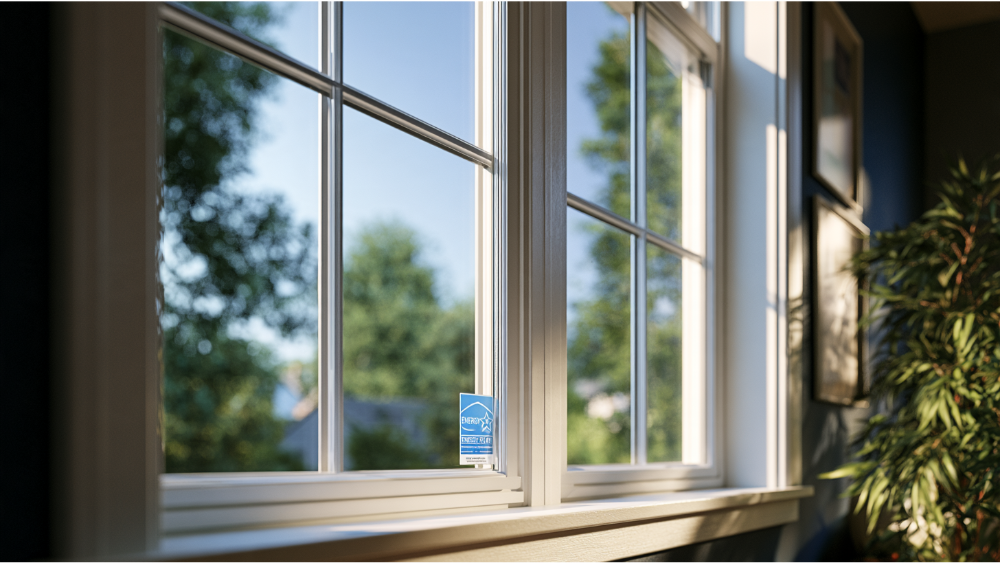
No, not all double pane windows are ENERGY STAR certified. And certified windows don’t have to be triple-pane. Pane count is a construction feature. Window performance is a measured result.
ENERGY STAR doesn’t require any specific frame material or number of panes. Vinyl, fiberglass, wood, aluminum, and composite products can all qualify if the finished unit meets the criteria for the zone. A well-engineered double pane window with the right low-E coating and gas fill can post better numbers than a poorly built triple-pane unit, and triple glazing adds weight, cost, and hardware stress that mostly pays off in cold climates. The most energy efficient windows in any lineup aren’t automatically the ones with the most glass layers.
Compare the NFRC numbers on the two quotes in front of you. The pane count is a detail, not the verdict. (More on the tradeoffs in Double-Pane vs. Triple-Pane Windows.)
Low-E glass, argon gas fill, and quality frame materials
Three components do most of the work behind the ratings.
Low-E coatings. These are microscopically thin metallic layers bonded to the glass surface. They reflect infrared heat and UV light while letting visible daylight through, which is how low-E glass can reduce heat transfer without making the room dim. Different coatings are tuned for different climates, and that’s a big part of why two windows from the same line can carry different SHGC numbers.
Gas fill. The space between multiple panes is filled with argon gas (sometimes krypton) instead of ordinary air. Argon is denser and slows heat movement, which lowers the U-factor without adding thickness.
Frame material. Vinyl, fiberglass frames, wood, aluminum, and composites each expand, conduct heat, and age differently. Vinyl is popular for good reason: it’s low maintenance, doesn’t need repainting, and insulates well. Wood windows offer a classic look but ask more of you in upkeep. Warm edge spacers at the glass perimeter matter too, because that edge is where condensation and heat loss tend to show up first.
We’re a factory-direct representative for Anlin Windows, and we document the exact glass package, coating, and gas fill before anything is ordered. Not every configuration qualifies in every zone, which is exactly why it goes in writing.
How to choose windows that match your local climate and energy efficiency goals
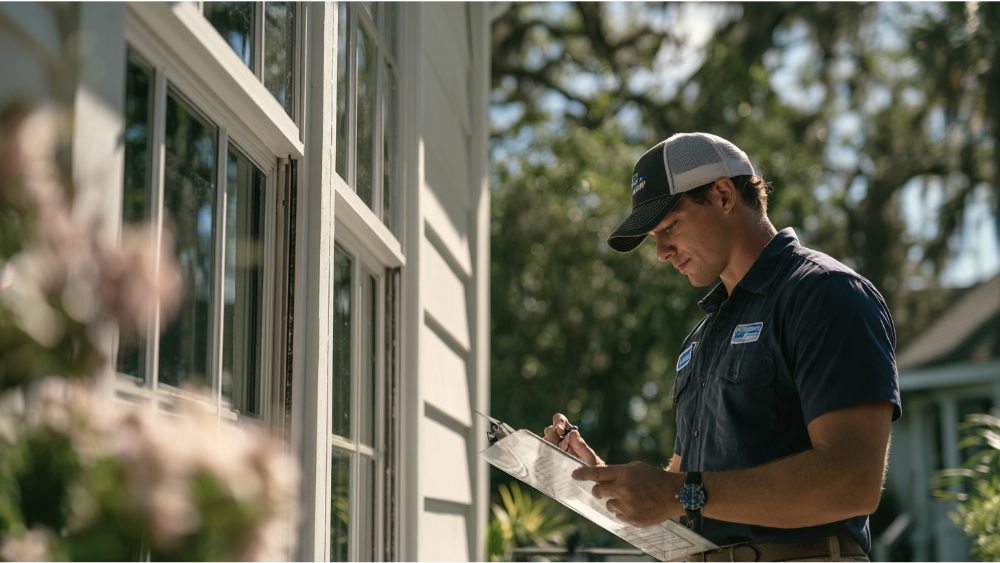
- Find your ENERGY STAR climate zone using the official finder. Everything downstream depends on this.
- Decide whether heat loss or heat gain dominates your year. Long heating seasons push you toward a low U-factor with useful solar gain. Long cooling seasons, where air conditioning runs for months, push you toward a low SHGC.
- Set your U-factor and SHGC targets from the EPA energy efficiency guidelines for your zone, then hold quotes to them.
Orientation deserves its own thought. West- and south-facing glass takes the brunt of afternoon sun and generally benefits from a lower SHGC to reduce heat gain. A shaded north-facing opening isn’t fighting solar heat, so daylight and view may matter more there.
Operating style affects real-world sealing, too. Casement windows close against a compression gasket and seal tightly. Double hung windows slide, which makes them easy to clean and ventilate from the top. Picture windows have no operable gap at all, which is why they often post the best numbers in a lineup.
Why professional installation matters as much as the energy star rating
An ENERGY STAR certified window installed badly will still leak air. The rating on that label was measured in a lab, under controlled conditions, with the unit perfectly square. Your wall opening is not a lab.
Good installation means accurate measurement, a unit set square and properly shimmed so the sash operates without binding, flashing that sheds water away from the opening, and the perimeter gap sealed and insulated rather than stuffed and forgotten. Skip any one of those and you’ve paid for performance you won’t feel. (We go deeper in How Professional Window Installation Prevents Air and Water Leaks.)
If your home was built before 1978, the EPA Renovation, Repair and Painting Rule may apply. Window replacement is a covered activity, so ask your contractor about lead-safe work practices and containment before anyone touches a sash.
Our process is built to remove the guesswork: precision installation, a final walkthrough with you, post-installation cleanup, and a typical one to two day timeline for most homes. Two separate protections back the work. The Anlin Limited Double Lifetime Warranty is the manufacturer’s coverage for vinyl, glass, hardware, and accidental glass breakage. Our 10-year labor warranty covers the installation itself. Those are distinct, and any contractor who blurs them into one vague “lifetime guarantee” is worth a second question.
Do ENERGY STAR windows qualify for federal tax credits in 2026?

No. The federal Energy Efficient Home Improvement Credit (Section 25C) is not available for windows placed in service in 2026. IRS guidance states the credit is not allowed for property placed in service after December 31, 2025.
For 2025 installations, which may still matter if you’re filing or amending a prior federal tax return, the credit was 30% of qualified product cost with a combined $600 maximum credit for exterior windows and skylights. It excluded installation and prep costs, applied to your primary residence rather than rental properties, and required ENERGY STAR Most Efficient certification, a higher tier than standard ENERGY STAR certification. Those two labels get confused constantly, and ordinary certification did not qualify.
Be careful with third-party pages that still show “credit available” language. Treat the IRS as the controlling source on tax credits. Utility and regional rebate programs may still exist in your area, but they change often, so check the ENERGY STAR rebate finder and your own utility. Confirm anything tax-related with your tax professional.
Your ENERGY STAR window buying checklist
- Confirm your ENERGY STAR climate zone by ZIP code or county.
- Ask for the exact U-factor and SHGC in writing, not a general efficiency claim.
- Confirm the specific model and glass configuration, not just the product line name.
- Verify it in the NFRC Certified Products Directory or the ENERGY STAR Product Finder, which lists ENERGY STAR certified products by model.
- Put the ratings, model, and full installation scope in the contract.
- Check the ENERGY STAR and NFRC labels before the old windows come out, and photograph them.
- Compare the manufacturer product warranty and the contractor labor warranty separately.
- Walk the job at the end: every window opens, closes, locks, and seals, with the perimeter caulked and the site cleaned.
Frequently Asked Questions
How do I know what rating my windows are?
Check the NFRC label on the glass or the sticker on the frame. If the labels are long gone, look for an etched code on the spacer between panes, or search the manufacturer and model in the NFRC Certified Products Directory or ENERGY STAR Product Finder.
Are ENERGY STAR windows worth it?
For most homes replacing single pane or failing units, yes. EPA modeling shows up to a 13% household energy bill reduction, and the comfort and noise improvements show up immediately. There’s no guaranteed payback period, so judge it on comfort plus efficiency together.
Can ENERGY STAR certified windows still feel drafty?
Yes. Poor installation, an unsealed perimeter gap, or a failed insulated glass seal can undo the rating completely. The label describes the product, not the hole it was installed in.
Do ENERGY STAR windows have to be triple-pane?
No. Certification is performance-based, and plenty of double pane units qualify when the coating, gas fill, and frame are engineered well together.
Let’s get your project started
The label is where you start. The ratings on your contract and the quality of the installation are what you live with for the next twenty years, and they’re also what shows up in indoor comfort and in buyer appeal when you sell.
Elevate Construction & Window Installation serves homeowners across the Greater Sacramento Area and the Bay Area. We bring Northern California climate knowledge, regional building codes, and Title 24 expertise to every project, and we document the exact specifications of your new windows before anything gets ordered. For a deeper regional look, see our guide to Title 24 Window Requirements for Northern California.
Ready when you are. Get a Free Estimate with no commitment required, try our no-obligation online window cost estimator, or call us at (916) 202-2282.