Key Takeaway
Window seal failure occurs when the bonded edge of a double- or triple-pane insulated glass unit breaks down, allowing insulating gas to escape and moisture to become trapped between the panes. The only fix that restores energy efficiency is replacing the glass unit, sash, or full window. ENERGY STAR certified replacement windows can cut heating and cooling bills by up to 13% compared to non-certified products.
Window seal failure happens when the sealed edge of a double- or triple-pane insulated glass unit breaks down, letting the insulating gas escape and moisture creep in. If you see fog trapped between the window panes that won’t wipe away from either side, that’s the telltale sign of a broken seal. The lasting fix is usually replacing the glass unit, the sash frame, or the entire window, not cleaning the glass or adding caulk. If you’re a homeowner noticing fogging, drafty windows, or higher energy bills and you want a calm answer before you call anyone, you’re in the right place. Let’s walk through what’s happening and what your options are.
Quick Check: Is It Really a Failed Window Seal?
Before anything else, figure out where the moisture is. That one detail tells you almost everything.
- Fog wipes off the inside glass: that’s indoor humidity meeting cold glass, a form of condensation, not a seal problem.
- Moisture sits on the outside glass: often normal on efficient windows, and usually not a concern.
- Fog is trapped between the panes and won’t wipe away: that’s a failed window seal.
What Is Window Seal Failure? (Inside the Insulated Glass Unit)
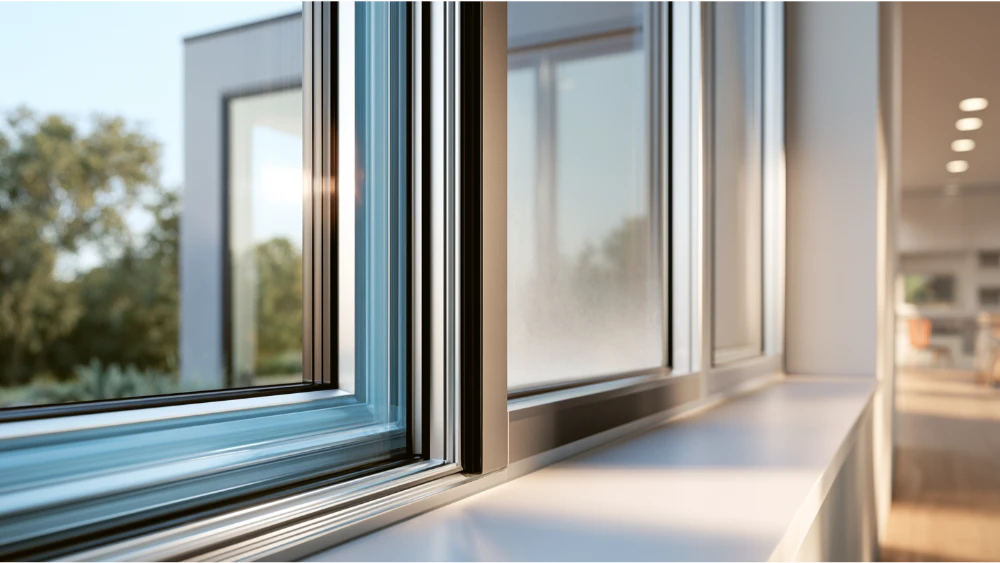
Modern windows use an insulated glass unit, or IGU: two or more panes of glass held apart by a spacer, bonded with sealant, and filled with an inert gas between them. That gas is usually argon or krypton, which are dense, non-toxic, clear, and odorless, and they slow heat from moving through the glass. Double pane glass and triple pane windows both rely on this fill. The window seal does two jobs. It holds that gas in and keeps moisture out, which is what gives the unit its insulation value. Sealed IGU windows are tested against a standard called ASTM E2190, which checks things like fog resistance and how well the unit retains its argon fill over time. When the seal breaks down, gas leaks out and humid air moves in, and the window starts to fog.
Signs of a Broken Seal and Failed Window Frame
Most of these signs point to seal failure, though a few also hint at trouble in the window frame itself.
- Fog or haze between the window panes.
- Water droplets or condensation sitting between the two layers of glass.
- White, mineral-like residue on the inner glass surfaces.
- A distorted or dirty-looking view that cleaning won’t fix.
- Drafts or temperature swings near the window.
- Difficulty opening the window as the frame or hardware wears.
- Recurring fog that returns after you clean both sides.
- Soft spots, staining, or the start of mold around a wood frame, which can signal water getting past a broken seal.
Why Do Window Seals Fail?
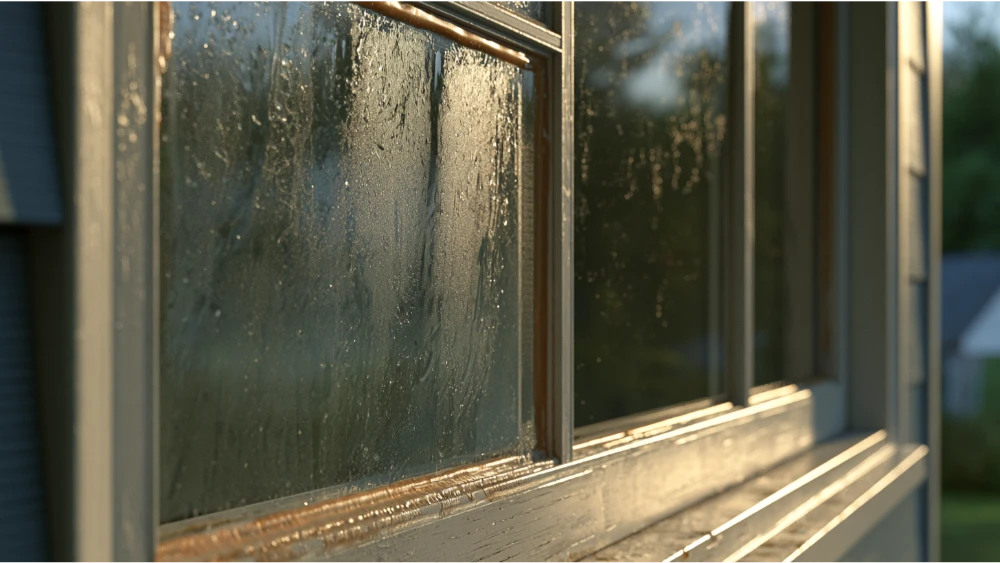
Seals wear out for a handful of reasons, and most come down to time and stress. These are the main reasons homeowners run into this common problem:
- Age and weather exposure: sealants break down over years of sun, heat, and rain.
- Temperature fluctuations: glass and spacers expand and contract with the weather, working the seal loose, and older windows feel it most.
- Blocked weep holes and poor drainage: trapped water sits against the frame and edges.
- Frame movement: a house that settles or shifts stresses the sealed edge.
- Improper installation: a unit that isn’t installed correctly fails sooner.
- Harsh cleaners: petroleum-based solvents can weaken the bond between glass and frame, along with worn caulking or aging paint at the perimeter.
- Manufacturing defects in the material: less common, but they happen.
Can a Broken Seal Be Repaired?
Here’s the honest answer. You’ll see “defogging” services advertised, and they can clear the visible haze. What they can’t do is restore the original inert gas fill or rebuild the hermetic seal, so they don’t bring back the full energy efficiency and insulation you had when the window was new. Defogging is mostly cosmetic. If you want a fix that actually restores comfort and efficiency, the real options are replacing the sealed glass unit, replacing the sash, or installing a full replacement window, depending on what shape the rest of the window is in. Don’t let anyone promise a true “reseal” of a failed IGU.
Repair or Replace? A Simple Decision Guide for Replacement Windows
The right move depends on how much of the window is still sound. If the frame is solid, a smaller fix may be all you need. If the material is worn out, new windows are often the smarter call.
| What you’re seeing | Likely next step |
|---|---|
| One foggy pane, frame in good shape | Inspect for IGU or sash replacement |
| Multiple failed windows across the home | Evaluate whole-home replacement for better value |
| Rot, warping, water damage, mold, or failed hardware | Full window replacement |
| Old, inefficient windows plus comfort or energy goals | Replacement windows are often the better long-term value |
We believe in quality without compromise, and that means recommending the smallest fix that solves the problem, not the biggest invoice.
Does a Broken Seal Hurt Your Home’s Energy Efficiency?
Yes. When the seal fails and the gas escapes, the glass loses much of its insulating value, and your home’s energy efficiency drops with it. You feel it as drafts, uneven room temperatures, and creeping energy bills. This is where product ratings matter. NFRC labels show whole-product performance instead of vague claims, with several key figures worth understanding:
| NFRC rating | Typical range | What it tells you |
|---|---|---|
| U-factor | 0.10 to 2.00 | How well the window insulates (lower is better) |
| Solar heat gain coefficient (SHGC) | 0.00 to 1.00 | How much solar heat the window lets in |
| Visible transmittance | 0.00 to 1.00 | How much daylight comes through |
| Condensation resistance | 1 to 100 | Resistance to condensation (higher means less risk) |
ENERGY STAR® sets U-factor and SHGC targets by climate zone under its current specification effective October 23, 2023, and certified windows can cut heating and cooling bills by up to 13% nationwide compared with non-certified products. Pick products suited to your climate zone and local energy code, and always ask for the Energy Star® certified label. Reputable window manufacturers make these labels easy to find.
Is Window Seal Failure Covered by Warranty?
There are two separate layers of coverage, and it helps to keep them straight.
- Manufacturer warranty (the product): For eligible Anlin windows, the Anlin Limited Double Lifetime Warranty covers vinyl, glass, hardware, and even accidental glass breakage, and it’s transferable to the next homeowner, subject to the warranty’s terms. Anlin’s current residential warranty runs July 2024 to present.
- Installer warranty (the workmanship): Our 10-year workmanship warranty covers the quality of the installation process itself, from the window frame to the finished seal.
Keep your window labels, warranty documents, installer paperwork, and a few photos in one place. That records what you have and makes any future claim far simpler.
What to Ask Before Hiring a Window Professional

A few questions will quickly separate a careful pro from someone who’ll cut corners:
- Can you diagnose whether it’s the IGU, the window panes, or the frame that’s failing, and whether either air or moisture is getting past the igu seals?
- Do you install Energy Star® certified products with NFRC labels available?
- Do you follow the manufacturer’s installation instructions during the whole process?
- How do you handle lead-safe requirements in homes built before 1978? (Under the EPA RRP Rule, window replacement is always covered regardless of square footage, unlike the 6 sq. ft. interior / 20 sq. ft. exterior thresholds for minor repairs.)
- What labor warranty is included?
- Do you clean up and complete a final walkthrough?
Get a Clear Answer With a Free Estimate
The simplest, stress-free next step is a professional evaluation. A technician confirms whether it’s the glass unit, the sash, or the entire window, then walks you through a clear process so you can decide with confidence. You get factory-direct products, professional installation, and warranty-backed peace of mind that keeps your house sealed against the outside elements. To keep new window seals healthy after your replacement windows are installed, use mild cleaners, skip petroleum-based solvents, and keep tracks and weep holes clear so weather and moisture drain away, which matters most in winter when temperature swings are hardest on the seal. Ready when you are: Get a Free Estimate, no commitment required, or call us at (916) 202-2282.
Window Seal Failure FAQ
How much does it cost to replace a window seal?
There’s no fixed price. Cost depends on size, glass type, coatings, the condition of the window frame and material, access, and whether you need an IGU-only replacement or a full window. A free estimate is the accurate way to find out.
Does homeowners insurance cover broken window seals?
Usually not, since seal failure is wear and age rather than a sudden covered event. Check your specific policy to be sure.
What does window seal failure look like?
Fog, haze, water droplets, condensation, or white residue trapped between the panes that won’t wipe off from either side. In a wood frame, you may also see staining or early mold.
Is it worth replacing window seals?
Yes, when it restores comfort, keeps your home comfortable, and gives you a clear view. A pro can advise whether IGU, sash, or full window replacement makes the most sense for your home.