Key Takeaway
Fiberglass windows are worth it when you plan to stay long term, need rigid frames for large openings, or want slim sightlines and a paintable finish. Industry guides estimate replacement windows recoup roughly 60% to 70% of installed cost at resale, with fiberglass holding value well due to warp and rot resistance. Frame material alone does not determine energy efficiency; the glass package and NFRC whole-window ratings matter more.
Fiberglass windows are worth the premium when you need rigid, dimensionally stable window frames, slimmer sightlines, a paintable or custom finish, or lasting performance in large openings. They are not automatically more energy efficient than quality vinyl windows. The U.S. Department of Energy is clear that glazing selection is the most important energy efficiency decision in most windows, and Energy Star® criteria are material-neutral, so a fiberglass frame earns nothing by name alone.
This is written for the homeowner holding two quotes, or about to request one, who wants to judge strength, energy efficiency, and price without guessing. We install windows and doors across Northern California every week, and we would rather you buy the right windows than the most expensive ones.
Are fiberglass windows worth it? The short answer
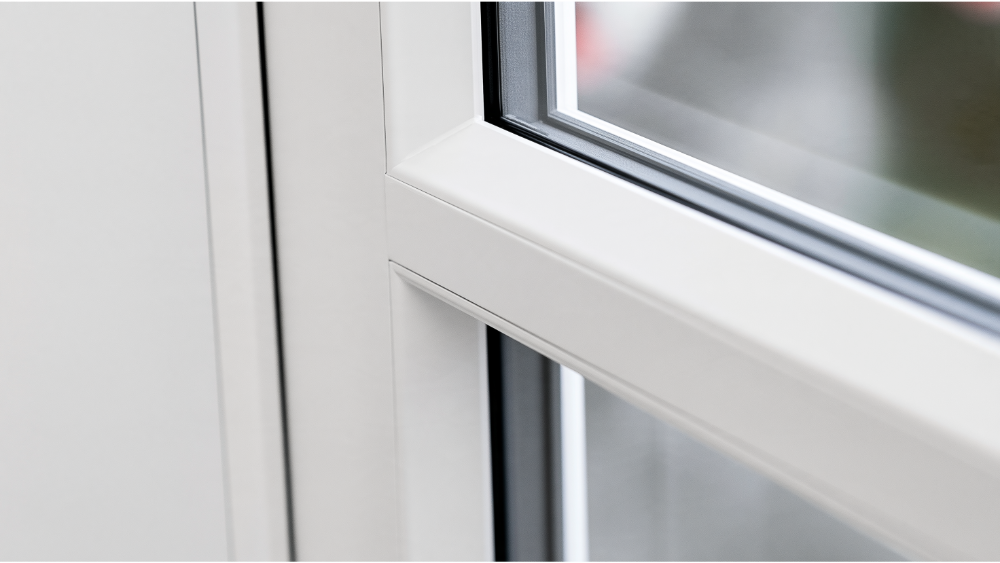
Are fiberglass windows worth it? Strength, efficiency, and price pull in different directions, so here is the quick version before we get into the details.
Fiberglass windows are likely worth it when:
- You have large or tall openings that need rigid window frames.
- You want narrow sightlines and more visible glass.
- You want a paintable finish or a dark custom color.
- You plan to stay in the home long-term.
- The quote includes a strong glass package and real warranty coverage, not one at the expense of the other.
Fiberglass windows probably aren’t worth it when:
- Your openings are standard sizes.
- Quality vinyl windows hit the same NFRC numbers for less money.
- You expect to sell within a few years and won’t recover the premium as resale value.
- The budget forces cuts to glass quality or installation scope.
- Most of your discomfort traces back to attic insulation, leaky ducts, or failed seals elsewhere in the house.
Judge quotes in this order: whole-window NFRC ratings, then the glass package, then installation quality, then warranty, then service after the job, then window material, then price.
What fiberglass frames are, and how they’re made
Fiberglass frames are made by pulling glass fibers through resin and forming them into rigid profiles, then cutting and joining those profiles into a frame. The resin cures into a thermoset material that holds its shape rather than softening. The Department of Energy notes that fiberglass frames are dimensionally stable and that their hollow cavities can be filled with insulating foam, which improves the frame’s insulation properties compared with wood or uninsulated frames.
You will run into three product types: all-fiberglass windows, fiberglass-exterior frames with wood interiors, and a composite material that blends fiberglass with something else. Those differences in window construction show up in both performance and price. The word “fiberglass” on a quote tells you almost nothing on its own.
Keep one distinction in mind for the rest of this article: frame material is not the same as whole-window performance. The glass, the assembly, and the install determine what you feel in the room and what you pay to heat and cool it.
What fiberglass offers: strength, extreme temperatures, and curb appeal
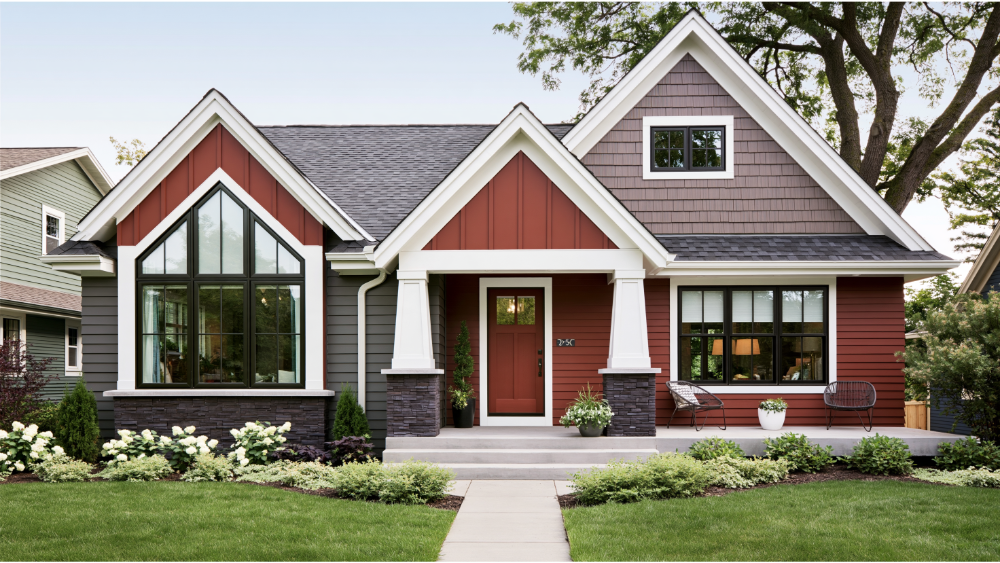
The material carries many benefits, and most of them are structural rather than thermal. It tends to attract homeowners seeking slim sightlines and a frame that disappears into the design.
- Rigidity for big openings. Fiberglass windows support large or tall units with less deflection.
- Dimensional stability in extreme temperatures. Fiberglass expands and contracts at nearly the same rate as the glass it holds, so the assembly can withstand extreme temperatures and daily temperature changes without stressing the seal through Sacramento summers and cool winter nights.
- Highly resistant to moisture and decay compared with traditional wood windows.
- Slimmer frames and more visible glass on some product lines, which means more natural light and a sleek look that supports curb appeal.
- Paintable or factory-finished exteriors, including dark colors.
- Minimal maintenance ownership once the windows are installed.
You will see claims online that fiberglass is some multiple stronger than vinyl. Ignore them. Those figures come from specific products, not from a category-wide test. The North American Fenestration Standard is material-neutral and rates structural integrity, air leakage, water penetration resistance, and forced-entry resistance on the actual windows, which is what tells you how a unit behaves in extreme weather. Ask your contractor for the product’s certified performance ratings, its allowable sizes, and whether the frame uses reinforcement. Tested numbers beat slogans.
Are fiberglass windows more energy efficient than vinyl windows?
Not necessarily, and where fiberglass wins it is often by a slight edge. Insulated fiberglass frames can outperform uninsulated ones. But both fiberglass and vinyl windows can earn Energy Star® certification, and neither material gets it automatically. Certification is based on the complete window hitting NFRC-verified numbers.
Two figures get misused constantly. The Department of Energy estimates that heat gain and heat loss through windows account for roughly 25% to 30% of residential heating and cooling energy use. That is the share of energy your windows influence, not a promised savings number. Energy Star® estimates that replacing single-pane windows with certified products can lower household energy bills by up to 13% on average nationwide. That energy savings figure applies to certified replacement windows generally, not to fiberglass frames specifically.
What actually drives a window’s energy efficiency
- Number of glass panes
- Low-e coatings
- Gas fill between the panes
- Spacer design at the glass edge
- Frame construction and whether cavities are insulated
- Operating style
- Air leakage through the assembly
- Installation, flashing, and sealing that produces an airtight seal at the window-to-wall connection
Premium fiberglass windows installed poorly will underperform quality vinyl windows installed with precision, and sloppy sealing is one of the most common sources of energy loss in a replacement project. Energy Star® makes this point directly, and some manufacturers tie warranty coverage to correct installation.
The NFRC numbers to compare on every quote
These five ratings tell you the real energy performance story on any windows you are quoted.
| Rating | What it tells you |
|---|---|
| U-factor | How well the window resists heat flow. Lower is better. |
| Solar Heat Gain Coefficient (SHGC) | How much solar heat gets in. Lower blocks more heat. |
| Visible Transmittance | How much daylight passes through. Higher is brighter. |
| Air Leakage | Air passing through the assembly. Lower is better. Energy Star® caps it at 0.3 cfm/ft². |
| Condensation Resistance | Resistance to condensation forming. Higher is better. |
Compare the exact configuration on the NFRC label, not the number printed in a brochure for a different glass package.
How much do fiberglass windows cost?
There is no authoritative national price, and the “average cost” articles disagree wildly because they mix product-only pricing with installed pricing across totally different scopes. The Energy Star® planning tool estimates roughly $400 to $1,200 per installed window in southern and south-central zones and $500 to $1,500 in northern and north-central zones, noting premium materials run higher. Current editorial guides publish fiberglass ranges of about $300 to $1,900 per window, $500 to $1,500 installed, and one goes as wide as $800 to $3,500. Those spreads are useful only as proof of how scope-dependent the answer is.
| Source of the estimate | Published range per window | What that range covers |
|---|---|---|
| Energy Star® planning tool, southern and south-central zones | $400 to $1,200 | Installed cost estimate; premium materials noted as running higher |
| Energy Star® planning tool, northern and north-central zones | $500 to $1,500 | Installed cost estimate; premium materials noted as running higher |
| Editorial guides, product only | $300 to $1,900 | Fiberglass unit pricing, no installation scope defined |
| Editorial guides, installed | $500 to $1,500 | Fiberglass window plus installation labor |
| Widest published editorial range | $800 to $3,500 | Mixes sizes, styles, glass packages, and scopes together |
What actually moves the price
- Opening size and shape, including geometric, bay and bow, and tall casements
- Operating style
- Glass package and coatings
- Custom or dark finishes
- Insert (pocket) versus full-frame replacement
- Interior and exterior trim work
- Disposal and cleanup
- Permit fees
- Dry rot or water damage discovered once the old windows come out
Because of all that, the only number worth acting on is an itemized estimate covering product and installation costs for your specific openings. We also offer 0% APR financing OAC through Synchrony Bank, HERO, and Home Run Financing, with up to 25 months no-interest and 100% project financing OAC, with terms reviewed during your consultation.
Vinyl vs fiberglass windows: which is the better value?
Here is how each material stacks up on the points that actually change your decision.
| Vinyl windows | Fiberglass windows | |
|---|---|---|
| Upfront cost | Lower | Highest of the mainstream materials |
| Frame rigidity | Good, may need reinforcement in large units | Very rigid |
| Energy efficiency | Depends on glass and assembly; can meet Energy Star® | Depends on glass and assembly; can meet Energy Star® |
| Maintenance | Low maintenance, never painted | Low maintenance, painted finishes need eventual upkeep |
| Sightlines | Wider frames on some lines | Often slimmer, more visible glass |
| Color options | Good, varies by line | Strong, including dark colors |
| Availability and lead time | Widely available | Fewer lines and installers in some markets |
| Warranty | Varies; strong lifetime coverage available | Varies by manufacturer |
| Best use case | Standard openings, value-focused whole-home projects | Large openings, slim sightlines, custom finishes |
Published lifespan estimates for fiberglass windows range from roughly 30 to 40 years up to 40 to 60 years depending on which guide you read. That long lifespan is part of the appeal, since nobody wants frequent replacements, but those are editorial estimates, not guarantees. Fiberglass earns its higher price when a specific structural or design need calls for it. (See our full fiberglass vs vinyl windows comparison for a deeper breakdown.)
Vinyl window pros in a Northern California climate
Vinyl frames are made from polyvinyl chloride, and for many homes with standard openings, quality vinyl windows do the job for less. The factory-direct, Energy Star® certified Anlin windows we install deliver the comfort, efficiency, and durability homeowners are after, with multi-chambered frames, low-e glass packages built for valley heat and Northern California weather conditions, and low maintenance ownership that never asks you to repaint. They are backed by the Anlin Limited Double Lifetime Warranty covering vinyl, glass, hardware, and accidental glass breakage.
When choosing fiberglass windows is worth the higher upfront cost
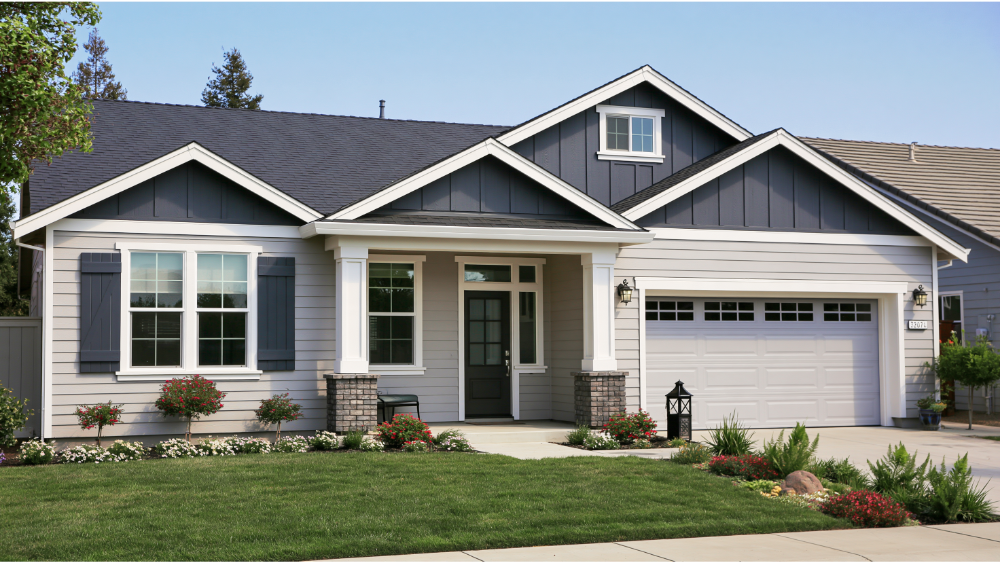
Fiberglass makes sense when one of these describes your project:
- Oversized picture windows or wide openings next to a patio door
- Tall casement windows where frame deflection is a real concern
- Architectural homes where slimmer frames and more natural light add aesthetic appeal and curb appeal
- Dark or custom exterior colors that need to match your home’s exterior exactly
- You plan to stay 15 to 20 years or more and want the option to repaint later
- The fiberglass quote comes with a strong glass package, a complete installation scope, and real warranty coverage, not one traded for another
The cons of fiberglass windows: when it isn’t worth it
Most pages on this topic are written to sell one material. Here is the other side.
- Fiberglass windows carry the highest upfront cost of the mainstream window materials.
- Fewer product lines and fewer trained installers exist in some markets, which can mean longer lead times and harder parts sourcing years from now.
- There is no automatic energy efficiency advantage over well-built vinyl windows with the same glass.
- Painted finishes need maintenance eventually, so the low maintenance advantage narrows over time.
- The higher cost is wasted if it forces compromises on glass, installation, or warranty.
One more situation nobody mentions: if your drafts and high bills are coming from attic insulation, duct leaks, or failed seals elsewhere in the envelope, no window material fixes that. Good windows help. They cannot carry a leaky house.
Are fiberglass windows worth it in Sacramento and Northern California?
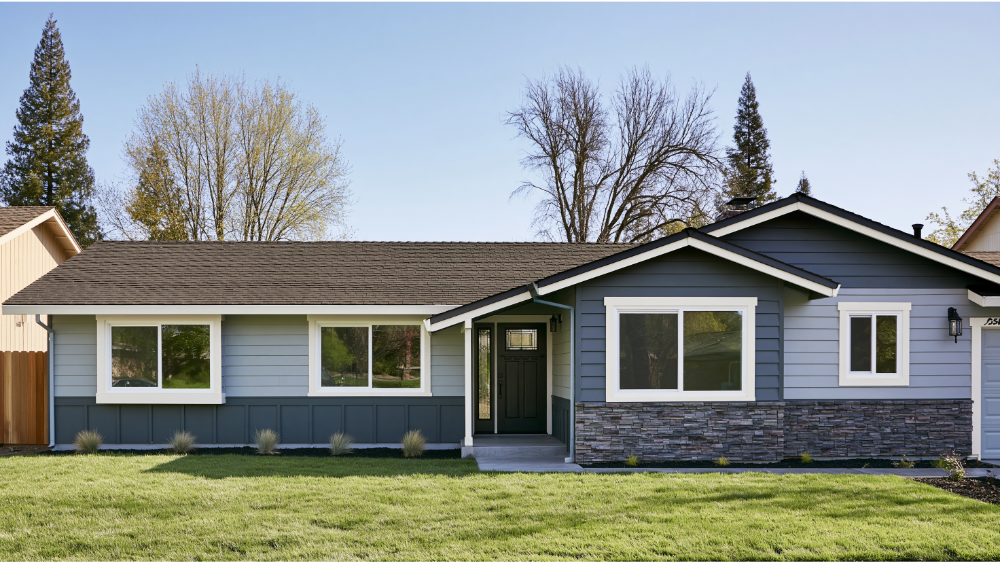
Sacramento’s problem is summer heat and solar gain, not sustained cold weather. That shifts the priority. SHGC and the low-e glass package deserve at least as much attention as the window material, because fiberglass windows with the wrong glass will still let your west-facing rooms bake through July.
The best windows for Sacramento heat and long-term energy savings
Sacramento is generally represented by California Building Climate Zone 12, though the project address should be verified through the current CEC climate-zone tool. California’s 2025 Energy Code applies to permit applications submitted on or after January 1, 2026. For prescriptive residential replacement windows in Climate Zone 12, current guidance identifies a maximum U-factor of 0.27 and a maximum SHGC of 0.23. Treat those as a planning reference, not a substitute for project-specific code review, since applicability varies by scope and compliance method. We install Title 24 compliant, Energy Star® certified windows and know how Northern California building codes, energy standards, and climate loads apply to a real house, including openings that face full afternoon sun and extreme heat for months at a stretch. (More in our guides to California Title 24 requirements for replacement windows and choosing the right low-e coating for Sacramento.)
Permits and paperwork: who handles what
The City of Sacramento lists replacing windows as work requiring a building permit, with separate forms for like-for-like replacements, material changes, and historic properties. Requirements also vary by jurisdiction across the region. We sort out permitting questions, code compliance, and what the installation process will look like day to day during the consultation, so none of it lands on you.
How to compare vinyl and fiberglass windows quote by quote
Put both quotes next to each other and confirm every line matches:
- Same opening dimensions
- Same window style
- Same pane count and low-e package
- Exact NFRC U-factor and SHGC
- Air leakage rating
- Insert versus full-frame installation
- Interior and exterior trim included
- Who pulls the permit
- Disposal and cleanup
- Manufacturer warranty terms
- Separate labor warranty
- Lead time and parts availability
- Post-installation service
The last three lines are where quotes for vinyl and fiberglass windows quietly diverge, and where coverage can be conditioned on proper installation. Our answer stays separate on purpose: the Anlin manufacturer warranty provides double lifetime coverage on vinyl, glass, hardware, and accidental glass breakage, and Elevate carries its own 10-year labor warranty on the installation. Two distinct protections, never blended into one vague promise. Our support doesn’t end after installation. (See also: insert vs full-frame window replacement.)
Frequently Asked Questions
What is the downside of fiberglass windows?
Highest upfront cost among mainstream window materials, narrower product and installer availability in some markets, and painted finishes that need eventual upkeep. There is also no guaranteed energy efficiency edge over quality vinyl windows with a comparable glass package.
Are fiberglass windows worth the extra money?
Yes when you have large openings, want slim sightlines or a custom dark finish, and plan to stay in the home for the long haul. No when comparably rated vinyl windows meet the same performance goals for less, or when the fiberglass premium forces you to downgrade the glass or the install.
Which fiberglass window brand is the best value for the money?
Value comes from the NFRC ratings on the exact configuration quoted, the completeness of the warranty across frame, glass seal, hardware, and finish, the installer’s separate labor warranty, and whether parts and service will still be available locally in ten years. We’re factory-direct for Anlin windows, and we’re happy to walk you through how any quote’s ratings compare.
Do fiberglass windows deliver more energy savings than vinyl windows?
Sometimes, usually by a slight edge, and the glass package generally matters more than the frame. Energy Star® criteria are material-neutral, so both vinyl and fiberglass windows can qualify. Compare U-factor, SHGC, and air leakage on the actual products quoted.
How long do fiberglass windows last?
Published estimates vary by decades and are editorial rather than guaranteed. Real service life depends on glass-seal performance, hardware, finish, installation quality, sun exposure, and whether parts and warranty support are still available years down the road.
Let’s find the right windows for your home
We’ll walk your home, measure the openings, put the NFRC numbers side by side, and tell you honestly whether fiberglass windows or quality vinyl windows fit your house and your budget better. Quality without compromise, no obligation. If you’re not ready to talk yet, start with our no-obligation online window cost estimator and answer a few quick questions. When you are ready, Get a Free Estimate, no commitment required, or call us at (916) 202-2282. Ask about 0% APR financing OAC during your consultation.