Key Takeaway
A window seal refers to one of three components: the factory edge seal on an insulated glass unit, the weatherstripping between the moving sash and frame, or the perimeter sealant around the installed frame. Fog trapped between panes that you cannot wipe off signals a failed IGU edge seal, while drafts at a closed window point to worn weatherstripping or perimeter gaps. Each failure has a different repair, and identifying the right one prevents unnecessary costs.
A window has several different seals, and the right fix depends entirely on which one failed. Fog trapped between the panes usually means the factory seal on the insulated glass unit has broken down. Drafts you feel near a closed window usually mean worn weatherstripping at the sash or gaps around the frame. Those are two different components with two different repairs, and confusing them is how homeowners end up paying for glass they didn’t need. If you’re staring at a hazy pane or feeling cold air by a window you know is latched, this guide will help you tell the difference and understand what level of work each problem actually calls for.
What Is a Window Seal? (The Three Seals Every Window Has)
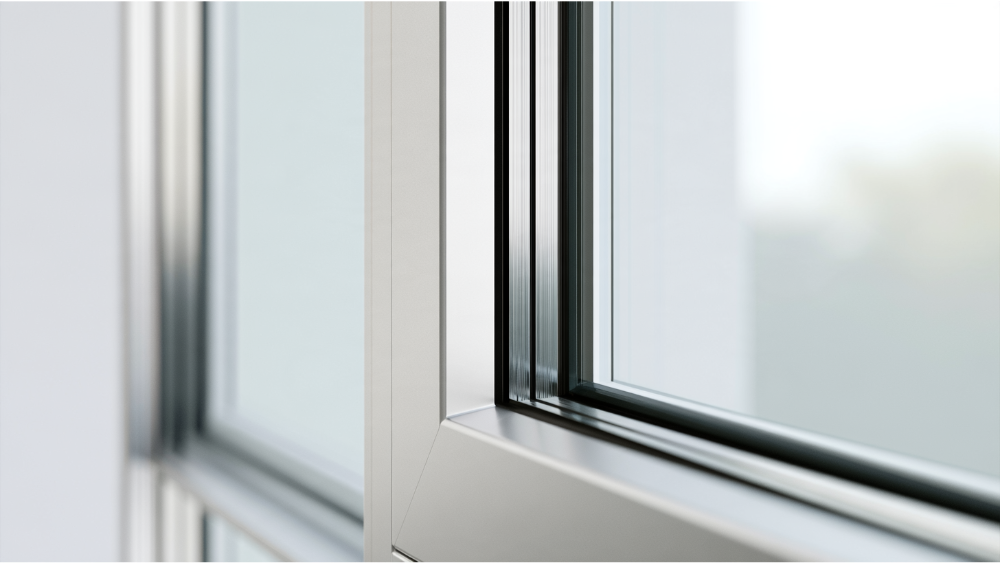
“Window seal” is a catch-all term for three separate parts of the window, each designed to do a different job.
| Seal type | Where it is | What it does | Typical failure sign |
|---|---|---|---|
| IGU edge seal | Factory bond at the edge of the glass package | Holds the insulating airspace between panes and keeps moisture out | Fog or haze you can’t wipe off either side |
| Sash weatherstripping | Between the moving sash and the frame | Blocks air leakage while letting the window open | Drafts, rattling, visible daylight, dust lines |
| Perimeter air and water seal | Between the frame, rough opening, trim, and flashing | Manages air and water around the installed window | Drafts behind trim, stains, peeling paint, leaks |
Insulated Glass Unit (IGU) Edge Seal
Insulated glass is two or more panes held apart by a spacer and sealed at the factory. The Department of Energy notes argon performs well in a gap of about ½ inch, while krypton is used in narrower spaces closer to ¼ inch. That sealed airspace is the insulation.
Sash Weatherstripping and Gaskets
Weatherstripping goes on moving parts. DOE draws the line clearly: caulk for stationary joints, weatherstripping for anything that opens and closes.
Perimeter Air and Water Seal
This is the sealant, flashing, and insulation between the window frame and your wall. It’s hidden behind trim, which is why its failures often get blamed on the glass.
Is It a Window Sill or a Window Seal? (And What a Window Seal Is Called)
The sill is the flat horizontal ledge at the bottom of the window, the surface you’d set a plant on. The seal is the material or factory bond that closes gaps. Installers use more specific names: IGU edge seal, glazing seal, weatherstripping, gasket, and perimeter sealant. The same vocabulary applies to exterior doors and sliding doors, where a door seal is almost always a compression gasket or weatherstrip rather than anything factory-bonded.
Quick Window Seal Diagnosis: Symptom, Likely Cause, First Step

Start with what you’re actually seeing or feeling.
| Symptom | Likely failed seal | First action | Likely repair level |
|---|---|---|---|
| Fog between the panes | IGU edge seal | Try wiping both glass surfaces | Warranty claim, then glass or sash replacement |
| Drafts at a closed, locked sash | Sash weatherstripping | Inspect the gasket for cracks or flattening | Weatherstripping replacement |
| Drafts felt behind the trim | Perimeter seal or rough-opening gaps | Check air movement along the casing | Perimeter air sealing |
| Water or stains at the sill | Drainage, flashing, or perimeter seal | Confirm weep holes are clear | Drainage clearing to flashing repair |
| Rattling or visible daylight | Sash weatherstripping or hardware | Check lock engagement and gasket fit | Adjustment or weatherstripping |
If two or more rows apply to the same window, that’s worth a professional look.
Where Is the Condensation? The Simplest Window Seal Test
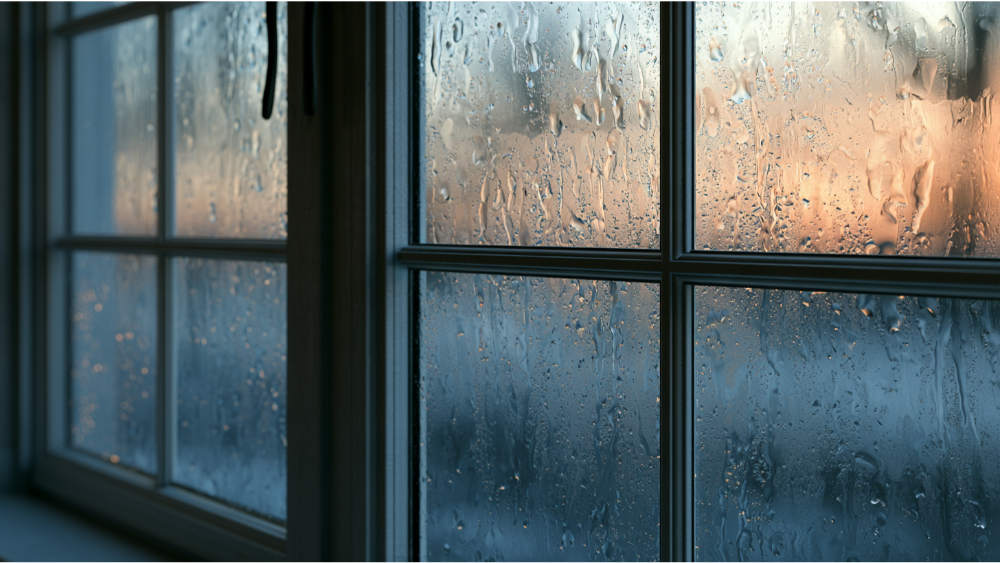
Moisture location tells you almost everything. Take a dry white cloth to the glass:
- It wipes off on the inside: that’s surface condensation from indoor humidity, not seal failure. The glass is simply below your indoor air’s dew point.
- It wipes off on the outside: normal in warm, humid conditions when the exterior glass sits below the outdoor dew point. ENERGY STAR® treats this as expected behavior, not a defect.
- It won’t wipe off either side: the moisture is between the panes, and that points to a failed insulated glass seal.
- It’s collecting around the sill or trim: look at drainage, flashing, or another water source before you touch the glass.
If it’s indoor humidity, the EPA recommends keeping relative humidity below 60% and ideally between 30% and 50%, and drying damp materials within 24 to 48 hours to limit mold risk. ENERGY STAR® suggests running vented kitchen and bath fans about 20 minutes after cooking or showering. An annual look at your caulk and weatherstripping catches small problems before water damage starts.
Signs of a Failed Insulated Glass Seal
- Fog or haze that stays after cleaning both surfaces
- Mineral-looking deposits or white streaking inside the glass
- Visible distortion or a warped reflection
- Dulled clarity, or one pane that looks “dirty” only in certain light
Here’s the part most articles get wrong. A failed edge seal lets moisture into the sealed airspace and reduces the insulating value of that glass package, but it doesn’t blow cold air into your room. Drafts are a separate problem with a separate cause. Certified insulating glass is factory-tested for seal durability under ASTM E2190 through the Insulating Glass Certification Council, which is exactly why that assembly can’t be rebuilt in place on your wall.
Signs of Worn Weatherstripping or a Perimeter Air Leak
- Air movement you can feel at the sash with the window closed and locked
- Daylight visible at the meeting rail
- Rattling when the wind picks up
- Rubber or vinyl gasket that’s cracked, flattened, or missing in sections
- Dust lines accumulating on the sill
- Drafts behind the casing or trim, which point to gaps at the rough opening rather than the sash
Good weatherstripping creates an airtight closure while still letting the window move, and replacing it is one of the cheaper ways to cut an energy bill. DOE estimates that reducing drafts throughout an entire home can save roughly 5% to 30% a year. That’s a whole-home figure, not what one window will do for you. For reference, ENERGY STAR® Version 7.0 requires qualifying windows, sliding doors, and skylights to be rated at no more than 0.3 cfm/ft² of air leakage.
Why Do Window Seals Fail?
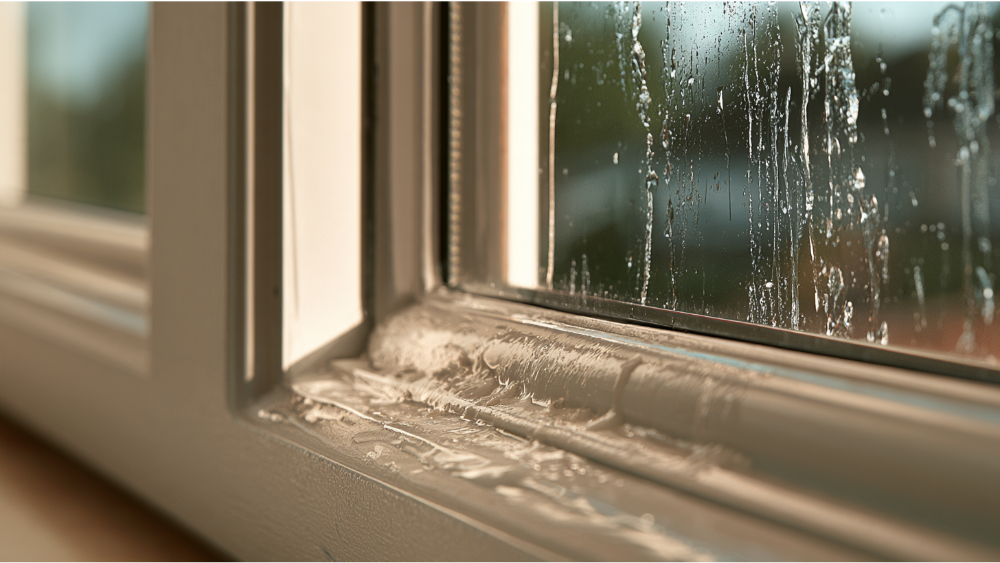
- Age and normal material breakdown
- Daily expansion and contraction from heating and cooling cycles, especially under the extreme temperatures inland Sacramento summers deliver
- Direct sun on south- and west-facing glass
- Frame movement or house settling
- Standing water and blocked drainage openings
- Installation stress or an out-of-square opening
- Harsh cleaners and chemicals that attack sealants and gaskets
Worn gaskets on a 20-year-old window are ordinary wear. A brand-new window with a bowed frame or a seal that failed early usually points to installation. No reliable source sets a single lifespan for all window seals, because exposure, product construction, install quality, and maintenance all change the answer.
Window and Door Seal Types: Which One Fits Your Gap?
Match the material to the gap, not to the brand on the package. Before you add a weatherstrip kit to your cart, measure the gap at its widest point and its tightest point.
- Self-adhesive foam tape: flexible and compressible, good for narrow gaps, and the easiest DIY option. Usually sold in white or black.
- V-strip: stops air leaks along sliding edges, which makes it effective on sliding windows and double-hungs.
- Compression rubber or silicone gaskets: squeeze tight where the sash closes against the frame. Silicone holds up well against moisture.
- Vinyl clad door seal: a direct replacement for worn weatherstripping on exterior and sliding doors.
- Rope caulk: fills small holes and works as a temporary seal to keep conditioned air in.
- Low-expansion spray foam: for larger gaps around the frame, used behind trim only. Standard expanding foam can bow a frame.
- Insulation film and sill draft stoppers: seasonal comfort fixes. Film traps an insulating layer of air in cold months, and a stopper blocks the drafts rolling off the glass at the sill.
Size and material matter more than anything else. Heavy-duty weatherstrip seals are designed for wide temperature swings, so they’re worth the upgrade on exposed elevations.
Door Seals: Same Idea, Different Assembly
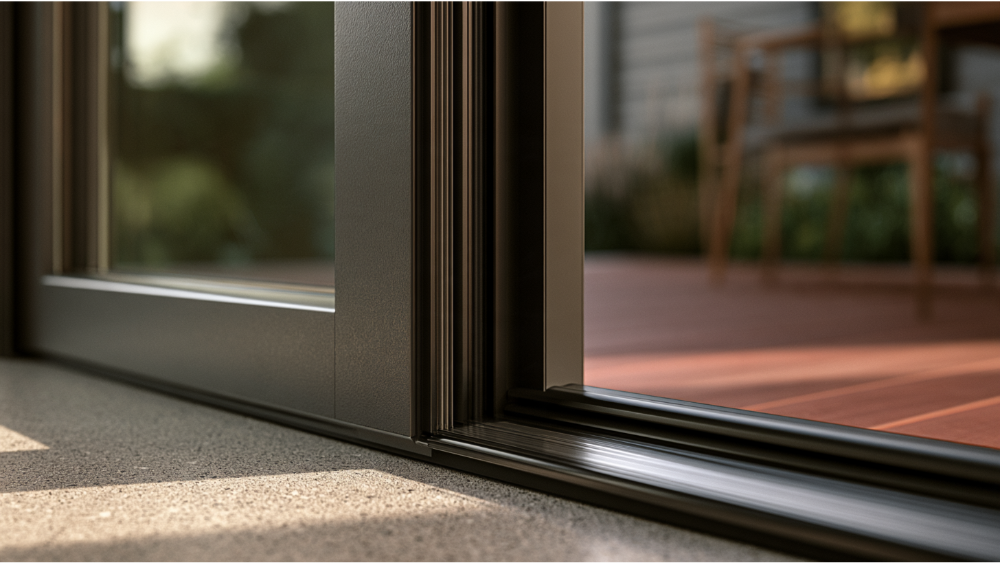
Doors leak more air than most homeowners expect, and a door seal is easier to diagnose than a window seal because you can see the light. Slide a dollar bill into the closed opening at several points. If it pulls out with no resistance, that section of the door seal isn’t compressing.
An exterior door relies on four things working together:
- Jamb gasket: a bulb or kerf-in compression seal that the door slab presses against. Most profiles ship in standard lengths and are sized by the kerf slot, so bring a short sample with you.
- Door bottom sweep: seals the gap between the slab and the threshold. Sweeps wear first because feet and grit hit them daily.
- Threshold seal: an adjustable cap that raises to meet the sweep as the gaps grow.
- Astragal: the vertical seal where two door panels meet on a double unit.
Sliding patio doors add an interlock seal where the panels overlap plus brush seals riding in the track. Dirty tracks and worn rollers let the panel sit slightly off, which no amount of new weatherstripping will fix. And because sliding doors use insulated glass, they can fog from a failed edge seal exactly like a window can. We install ProVia doors for that reason: the frame, sweep, threshold, and gasket are engineered as one product rather than assembled from parts that never quite match.
Can You Repair a Broken Window Seal?
Often, yes. Work through it in this order:
- Check the warranty first, before you spend anything.
- Replace worn weatherstripping or gaskets if the problem is drafts at the sash.
- Re-seal the correct perimeter joints with a sealant compatible with your frame material.
- Clear the weep holes so water can drain out.
- Replace the insulated glass unit when the frame and sash are sound.
- Replace the sash where the glass is integrated into a replaceable sash.
- Full-frame replacement only when the conditions below justify it.
Two cautions. Exterior caulk cannot rebuild a factory-sealed glass assembly, so don’t let anyone sell it to you as a fog fix. And drilled-hole “defogging” may improve appearance in some cases, but don’t assume it restores the original gas fill, the rated U-factor, or certified seal durability. California’s Energy Code actually recognizes glass replaced in an existing sash, or a sash replaced in an existing frame, as a repair when performance is at least equivalent to the original.
What Is the Best Way to Seal a Leaking Window?

Find where the water is getting in before you seal anything. Sealing the wrong joint can trap water instead of stopping it.
- Inspect during or right after rain, when the path is visible.
- Check the sill, the bottom corners, and behind the trim.
- Confirm the weep or drainage openings are clear of dirt, paint, stucco, and old sealant.
- Use caulk on stationary joints only, and weatherstripping on anything that moves.
- Address flashing and siding problems, not just the gaps you can see.
The Fenestration and Glazing Industry Alliance specifically warns homeowners not to caulk over weep holes. Doing that traps water inside the frame and turns a small leak into frame damage. A once-a-year look at your caulk and weatherstripping is low effort and prevents most of this.
When Does the Whole Window Need to Be Replaced?
Full replacement earns its cost when you see:
- A warped, swollen, or deteriorated frame
- Recurring water intrusion or interior damage
- A sash or door panel that won’t operate or lock properly
- Several failures in the same assembly
- Multiple aging, single-pane, or inefficient windows across the home
- A window that was installed poorly from the start
When replacement is genuinely the right call, it should deliver real gains in comfort, efficiency, and durability. That means Energy Star® certified, Title 24 compliant products installed correctly, not a cosmetic swap. Permit and energy-code specifics vary by jurisdiction and are worth confirming before anything gets ordered.
Check the Warranty Before You Pay for Any Repair

Gather four things: the manufacturer’s name, any stamps etched on the glass spacer, your original invoice, and the installer’s paperwork. Those usually determine whether you pay at all.
Keep the two types of coverage separate. The Anlin Limited Double Lifetime Warranty covers qualifying product parts including vinyl, glass, hardware, and accidental glass breakage, subject to the conditions in the written warranty, and it can transfer to the next homeowner. Our 10-year labor warranty is separate and covers installation and craftsmanship. As factory-direct representatives for Anlin windows, we can help you identify products and track down documentation.
How a Professional Window Seal Inspection Works
- We review the symptoms with you, including when they started and which windows and doors are affected.
- We run the condensation-location check on the glass.
- We inspect the frame, sill, and drainage openings.
- We test operation and locking on every sash and door.
- We evaluate air leakage at both the sash and the perimeter.
- You get a written recommendation naming the actual repair level.
We identify the failure first, then recommend only the work the window truly needs. When replacement is the answer, installation is often completed in one to two days with cleanup included, and all options and terms get reviewed at your free consultation.
Frequently Asked Questions
What is a window seal?
It’s any of three things: the factory edge seal on an insulated glass unit, the weatherstripping between a moving sash and its frame, or the sealant and flashing around the installed frame. Each fails differently and needs a different fix.
Is it a window sill or a window seal?
The sill is the flat horizontal ledge at the bottom of the window. The seal is the material or factory bond that closes gaps against air and water. People often say “sill” when they mean the perimeter seal underneath it.
What is a window seal called?
Depending on which one you mean: IGU edge seal, glazing seal, sash weatherstripping, gasket, or perimeter sealant. Exterior and sliding doors use the same terms, most often compression gasket or door seal.
How do I know if my door seal needs replacing?
Look for daylight along the jamb, a sweep that no longer touches the threshold, or a gasket you can press flat without any spring-back. Those all mean the door seal has stopped compressing and is letting drafts through.
What is the best way to seal a leaking window?
Locate the entry point first, then use caulk on stationary joints and weatherstripping on moving parts. Make sure the weep holes stay clear, because caulking over them traps water inside the frame.
Get a Clear Answer About Your Windows, Free and No-Obligation
You shouldn’t have to guess which seal failed. Book a free consultation and we’ll diagnose it and tell you the smallest repair that will actually work, with no commitment required. Prefer to start smaller? Use our online window cost estimator and answer a few quick questions, or call (916) 202-2282. With 17+ years of Northern California experience and Title 24 knowledge across the Greater Sacramento and Bay Area, we keep it simple and stress-free. 0% APR financing options are available OAC, with terms reviewed during your consultation.