Key Takeaway
Sliding glass door repair vs. replacement comes down to where the problem lives: repairs make sense for worn rollers, tracks, weatherstripping, locks, or a failed glass unit when the frame is still sound, typically costing $100 to $500. Replacement is the better call when the frame is warped, the sill is damaged, water persists after sealing, or multiple components are failing at once. A hands-on inspection, not the door’s age, should drive the decision.
Sliding glass door repair usually makes sense when the frame and sill are solid and the failure is limited to rollers, tracks, locks, weatherstripping, or a replaceable glass unit. Replacement makes more sense when the frame is warped, leaking into the surrounding wall, out of square, or simply can’t deliver the energy efficiency, security, or configuration you want. If your door sticks, fogs, drafts, or refuses to lock, the fix depends on what actually failed, not on a guess about the door’s age.
Elevate Construction & Window Installation installs and replaces doors and windows across Northern California, so we’ll be straight with you. When homeowners ask about sliding glass door repair vs replacement what makes sense always starts with diagnosis, not with a pitch for a new door.
Start With What Failed, Not How Old the Sliding Door Is
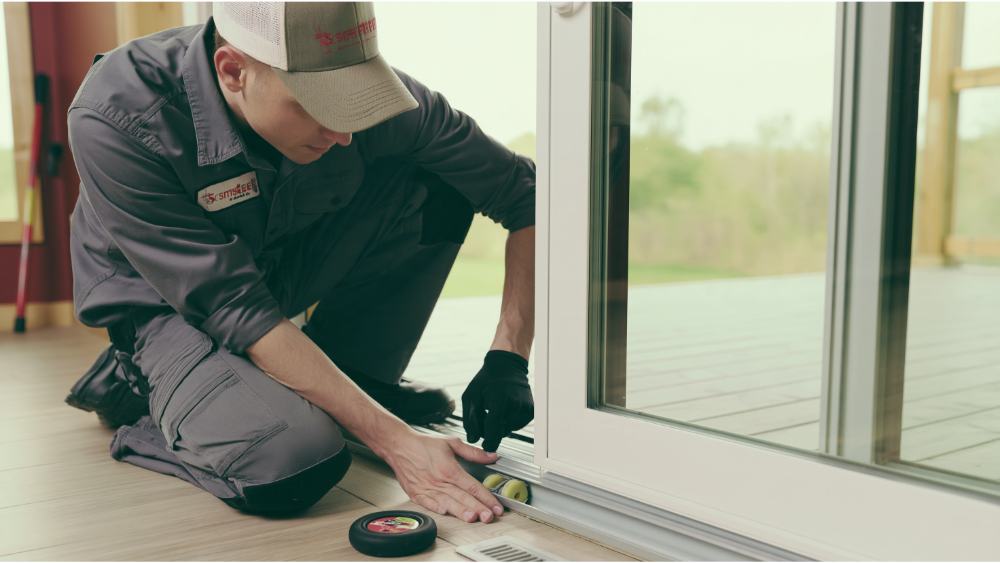
You’ve probably read that old sliding glass doors need replacing at 15, 20, or 25 years. Those numbers conflict with each other, and none come from code. Service life depends on the original product quality, how well the door was installed and flashed, the frame material, how often it gets used, sun exposure, track maintenance, and whether compatible parts still exist.
A 20-year-old door with a square, dry frame and worn out rollers is often a repair candidate. A much newer door with water intrusion or a racked frame usually isn’t. Start at the frame and work inward.
The Four Levels of Sliding Glass Door Work
A sliding glass door is a system: frame, sill and track, operable panel, fixed panel, rollers, lock hardware, weatherstripping, screen, and the glass itself. Those parts fail independently, which means there are four distinct project levels, and each carries a very different total cost:
- Component repair. Rollers, locks, weatherstripping, screen, minor track work. The most cost effective route when everything around the failed part is still sound.
- Glass-unit replacement. The insulated glass unit (IGU) is swapped inside the existing sash.
- Complete panel replacement. A compatible panel replaces the failed one, frame stays.
- Full replacement. Everything comes out, including the frame in the opening.
| Symptom | Likely failed part | Repair may work when | Replace when |
|---|---|---|---|
| Sticking or dragging | Rollers or track | Track is straight, frame is square | Frame is racked or track is crushed |
| Fog between panes | Failed IGU seal | Compatible glass or panel is available | Sash and frame are also failing |
| Drafts along the edges | Weatherstripping | Door closes tight after adjustment | Gaps persist because the frame moved |
| Won’t lock | Lock, keeper, or alignment | Alignment can be corrected | Door won’t stay square after adjustment |
| Water at the sill | Weep holes or weatherstripping | Drainage is simply blocked | Flashing or the wall below is damaged |
Which Parts Can Be Fixed With a Professional Repair?
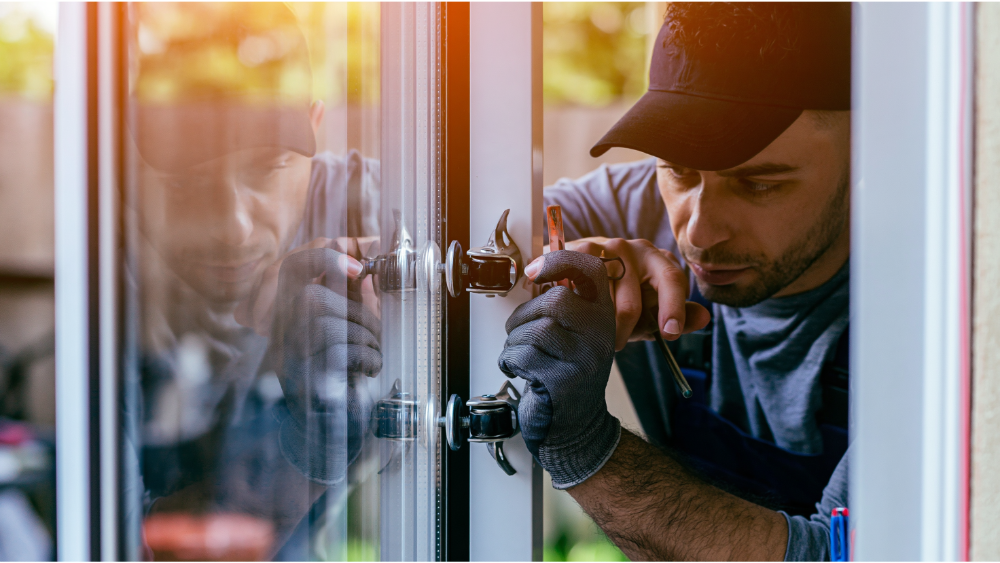
- Worn out rollers: the usual cause of dragging. New rollers often restore smooth operation.
- Minor track damage: a slightly bent lip can sometimes be straightened or capped.
- Locks, handles, and keepers: replaceable hardware, often paired with realignment.
- Weatherstripping: the fix for most edge drafts when the frame still closes tight.
- Weep holes: blocked drainage leaves standing water in the track, and clearing it is maintenance, not a replacement trigger.
- Screens: rescreened or replaced independently of the door.
- Glass units: a failed seal can sometimes be solved at the glass or panel level.
The honest caveat: on discontinued or older doors, compatible hardware may no longer exist, which can force replacement even when the frame looks fine. Elevate focuses on installation and replacement, so if a component-level sliding door repair is the right call for your home, we’ll say so.
Common Signs a New Door Beats Another Repair
- The frame is warped, cracked, corroded, or out of square. No roller adjustment fixes a frame that has moved.
- The sill or surrounding wall shows water damage. Repeatedly caulking a leaking sill can hide failed flashing or rot below the threshold. This is the sign we take most seriously.
- It still won’t close or lock after adjustment. That creates real safety risks for family members.
- Several systems are failing at once. Rollers, glass, and weatherstripping together usually signal a door at the end of its service life.
- Parts aren’t available. Obsolete hardware ends the repair conversation quickly.
- The door has single pane glass or poor insulation. Thin glass leaves the energy penalty in place, so your bills stay right where they are.
- You want a different size, style, or configuration. Changing the opening means full replacement by definition.
Foggy or Cracked Glass: Do You Need an Entire Door?
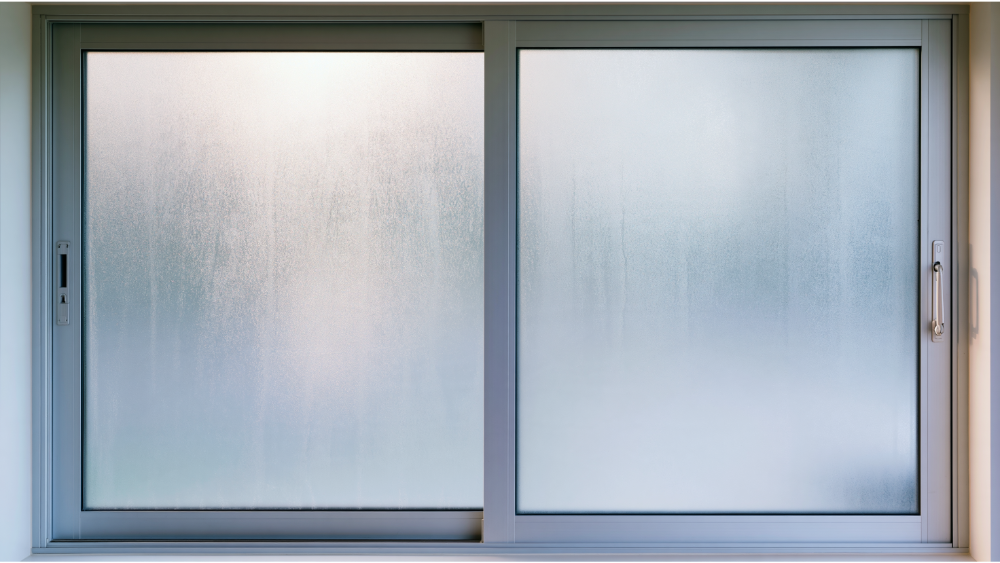
Not always, and you rarely need to replace the whole door to solve cloudy glass. Moisture between the panes means the insulated glass seal has failed, and no amount of cleaning brings back that clear glass view because the haze sits inside the sealed assembly. Condensation on the interior or exterior surface is different: that’s a dew-point and humidity issue driven by indoor moisture, airflow, and glass temperature.
When the frame is still serviceable, glass-unit or panel replacement is often possible instead of a whole new door. What isn’t optional is compliance. Glazing in sliding glass door panels sits in a hazardous location, so replacement glass must be code-compliant safety glazing tested under CPSC 16 CFR Part 1201, generally Category II, or a permitted ANSI Z97.1 alternative. Guessing at thickness or glazing type isn’t acceptable, and these panels are heavy and awkward. Leave them to a pro.
Repair Costs vs. Long Term Benefits: Energy Bills, Noise, and Comfort
Ignore the “replace if repair costs exceed 50%” rule floating around online. It ignores frame condition, warranty coverage, and the likelihood of the next failure. Compare outcomes instead, because the lowest initial cost today can mean frequent repairs and more money spent in the long run.
| Consideration | Repair | Replacement |
|---|---|---|
| Remaining service life | Extends what you have | A new door resets the clock |
| Future repair risk | Other parts are aging too | New system, new hardware |
| Energy efficiency | Unchanged unless glass is upgraded | Low-e energy efficient glass and better insulation |
| Security | Depends on frame alignment | Enhanced security features and better protection against break ins |
| Outside noise | Slightly improved with new seals | Meaningfully reduced |
| Warranty | Usually limited to the part | Manufacturer plus labor coverage |
On the money question: ENERGY STAR® reports up to 13% average nationwide heating and cooling savings across certified window, door, and skylight upgrades under its current specification, effective October 23, 2023. That’s a portfolio average, not a promise for one door. Lower cooling costs alone won’t pay for a replacement overnight, but paired with quieter rooms, easier operation, and everyday comfort, the long term benefits are what make the investment worthwhile for most homeowners. If cost is the barrier, we offer 0% APR financing (OAC), with terms reviewed during your consultation.
What Sacramento and Northern California Homeowners Should Know
Title 24 and Safety Glazing Rules
California’s 2025 Building Energy Efficiency Standards took effect January 1, 2026. A door with 25% or more glazing is treated as fenestration, which covers most sliding glass doors. In Climate Zones 11 through 14, the 2025 prescriptive maximums are a U-factor of 0.27 and an SHGC of 0.23. Replacement vertical fenestration totaling 75 square feet or less may qualify for an alteration exception at U-factor 0.40 and SHGC 0.35. A detail most articles miss: glass replaced in an existing sash, or a sash in an existing frame, is treated as a repair when performance is at least equivalent. Title 24 compliance is standard on our installations.
Permits and Sacramento’s Summer Heat
The City of Sacramento lists window and door replacement among work requiring a building permit. Historic properties may need preservation review. Confirm scope with your city or county building department before full replacement, especially if the opening, material, or exterior appearance changes. Pre-1978 homes may also trigger EPA lead-safe work practices, and that work belongs with a certified lead-safe firm.
Locally, west-facing glass and long summer heat make a low SHGC worth attention, since leaky glazing makes cooling systems work harder all season. Many homeowners handle a door and their aging windows in one project for that reason.
How to Choose a New Sliding Glass Door
Read the NFRC label. It reports U-factor (lower means less heat transfer), SHGC (lower means less solar heat entering), visible transmittance, air leakage, and condensation resistance. Temporary performance labels need to stay on the product through inspection. Efficient doors use two or more panes, low-e coatings, insulating gas fill, and thermally improved frames.
Then look at the install: a smooth roller and track system for easy access to your outdoor spaces, advanced locking mechanisms, proper perimeter sealing and flashing, clean removal, and a final walkthrough. We install factory-direct Anlin sliding glass doors in various styles, including Energy Star® certified configurations with advanced features built in. Coverage comes from two places: the Anlin Limited Double Lifetime Warranty from the manufacturer (vinyl, glass, hardware, accidental glass breakage) and our separate 10-year labor warranty.
Questions to Ask Before You Approve the Work
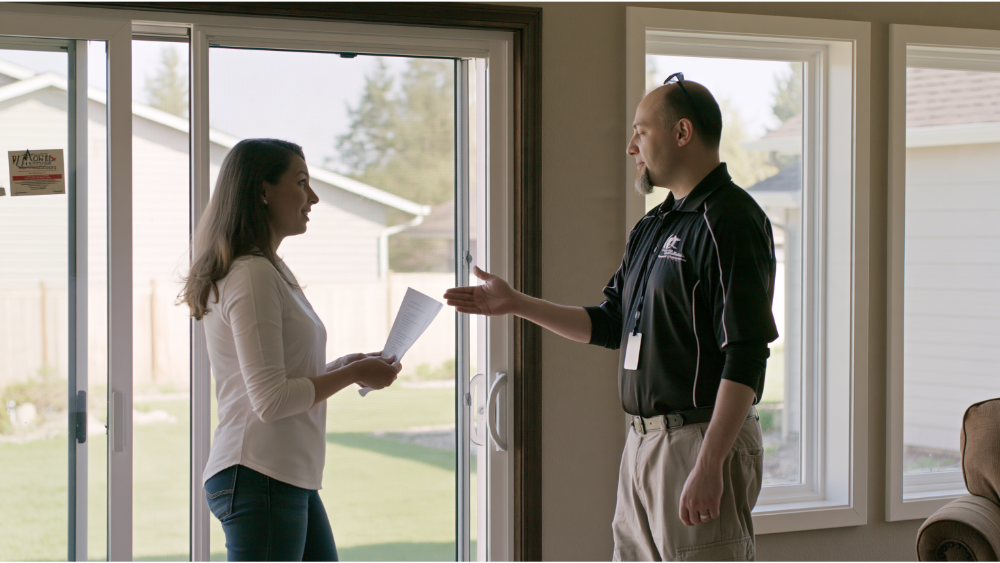
- Which component failed, and can you show me the frame or sill?
- Is glass-only or panel-only replacement possible here?
- What U-factor and SHGC will the new unit have?
- What does the quote include: permits, removal, trim, sealing, and cleanup?
- What happens if concealed water damage is found?
- Which warranty is the manufacturer’s, and which covers labor?
One protection worth knowing before you sign: California requires a written home improvement contract for projects over $500, and per CSLB the ordinary down payment cannot exceed $1,000 or 10% of the contract price, whichever is less, subject to its stated exception.
Frequently Asked Questions
Is replacing a sliding glass door worth it?
It’s worth it when repairs would only postpone the inevitable. If the frame is compromised, the glass is thin, or the door won’t lock reliably, a new sliding glass door buys energy efficiency, security, and warranty coverage a part swap can’t.
Is it better to repair or replace a door?
Repair when the frame and sill are square, dry, and solid and the failure is limited to one replaceable part. Replace when the frame has moved, water is getting in, or compatible parts no longer exist.
What is the average lifespan of a sliding patio door?
There’s no code-defined lifespan. Condition, installation quality, exposure, maintenance, and parts availability decide it. Two identical doors installed the same year can land in completely different places.
How much does it cost to replace a sliding glass door?
Cost depends on size, configuration, frame condition, and whether concealed damage turns up once the old unit comes out. We give a free, no-obligation estimate so you see real numbers for your opening, and 0% APR financing is available (OAC).
Making the Right Choice for Your Door
Call in a professional if the frame looks distorted, water is showing at or below the sill, the door won’t lock, or the glass is cracked. With 17+ years of experience across the Sacramento and Bay Area, we know Northern California building codes, Title 24, and what our climate does to a door. Whatever your sliding glass door needs, contact us for a Free Estimate, no commitment required, or call (916) 202-2282. Not ready to talk yet? Our online cost estimator is an easy place to start. Simple, stress-free, built to last, and our support doesn’t end after installation.