Key Takeaway
Awning windows are top-hinged windows that open outward from the bottom via a crank handle, forming a canopy that allows ventilation even in light rain. This style of awning windows explained suits bathrooms, kitchens, basements, and high-wall spaces. Their compression seal outperforms sliding windows on air leakage, and Energy Star certified versions can cut heating and cooling costs by up to 13 percent.
An awning window is a top-hinged window that opens outward from the bottom, usually with a crank handle. When it swings open, the sash tilts out and forms a small canopy over the opening, which lets fresh air in while helping keep light rain out. That outward opening design makes awning windows a smart pick for bathrooms, kitchens, basements, and spots high on a wall.
If you’re comparing window styles before a replacement or remodel, this guide walks you through where awning windows shine, where they don’t, and what to check before you buy. We’ll keep it honest, because the goal is a window solution that fits your home, not a quick product swap. Many homeowners start here, unsure which window style suits each room, so we’ll compare the awning window to casement windows, sliders, and other window styles as we go.
What Is an Awning Window?
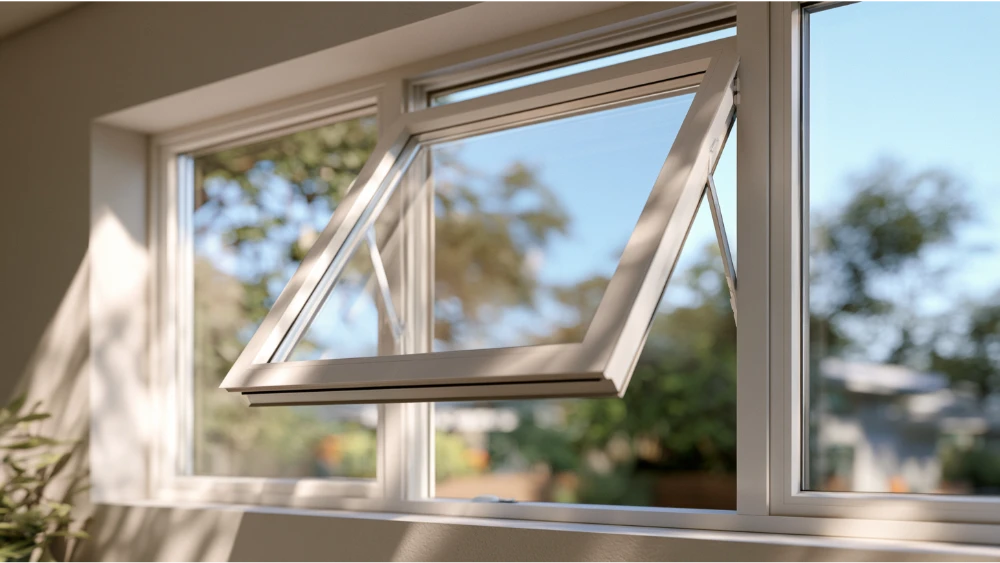
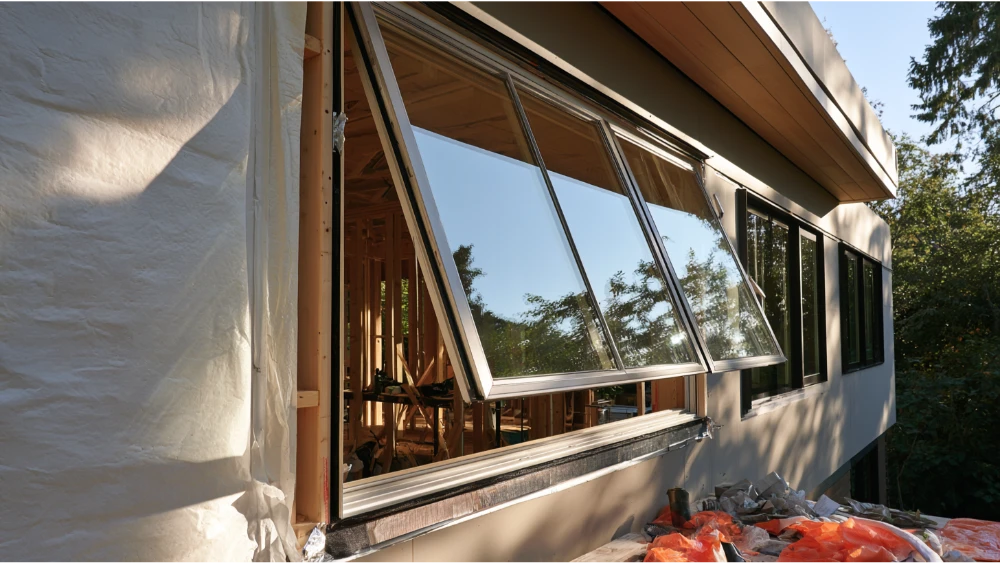
An awning window is hinged at the top and swings open from the bottom, typically using a crank or operator handle. The name comes from the shape it makes when open: the tilted sash looks a bit like a canopy or awning stretched over the opening.
Manufacturers like Anlin frame these windows around ventilation, clear views, and screen options. Because the sash pushes outward, the insect screen sits on the interior side of the frame, so you operate the crank from indoors without reaching around it. The result is a compact, easy-to-use window that brings in fresh air while keeping the weather at bay.
How Awning Windows Work
The mechanics of how awning windows work are simple. A hinge runs along the top of the sash. When you turn the crank, the bottom edge of the sash swings outward, angling the exterior glass away from the house. Turn the crank the other way and it draws back in. Because awning windows swing out from the bottom, that angled position is what sheds rain.
What matters most is how it closes. As the sash returns, it presses tightly against the frame in a compression-style seal. That firm contact is why awning windows resist air leakage better than sliding windows, which rely on tracks that never quite seal as tight. Many awning windows add a multi point locking system that pulls the sash even tighter for a secure seal. The U.S. Department of Energy notes that top-hinged windows that open outward generally have lower air leakage than sliders for exactly this reason. The interior screen stays in place while the window operates, so airflow and bug protection work together.
Key Benefits of Awning Windows
Awning windows solve a handful of real comfort problems when they’re placed well. Here’s what you get:
- Ventilation even in light rain. The angled sash acts as a small cover, so you can leave the window cracked during a passing shower and still enjoy fresh air.
- Privacy when installed higher. Placed above eye level, an awning window lets in natural light and airflow without giving neighbors a view inside.
- A tight seal and better energy efficiency. That compression close keeps conditioned air where it belongs. It holds cool air in during summer and warm air in during winter, which supports lower heating and cooling use by blocking hot air from leaking in.
- A good fit for compact wall space. Short, wide openings above counters or in tight rooms suit the awning shape.
- Curb appeal and design flexibility. Clean lines and frame color choices make the awning window work on both modern homes and traditional ones.
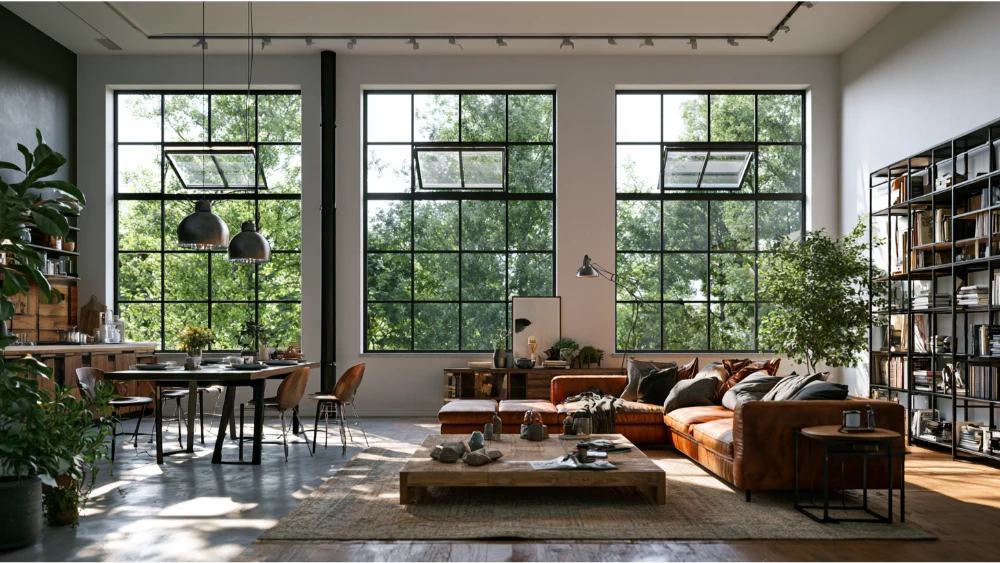
- Great pairing with a picture window. Set below or beside a fixed picture window, an awning window adds ventilation while the picture window keeps the view and the natural light.
Potential Drawbacks to Know First
No window style is perfect everywhere. Being upfront about the trade-offs helps you plan around them instead of getting surprised later.
- Usually not the best egress choice. The opening can be too small or awkward for emergency escape, which matters in bedrooms and basements.
- They open outward. Because awning windows open outward, that swing can conflict with walkways, patios, decks, or landscaping right outside the window.
- Exterior cleaning can be tougher. Depending on placement, reaching the exterior glass may take more effort.
- Size limits. Larger sashes get heavy, so hardware and weight can cap how big an awning window goes.
- Not friendly to standard window AC units. The outward swing and shape don’t accommodate a typical box air conditioner.
- Hardware needs quality and occasional care. The crank and operator do the work every time the window opens, so good hardware and light maintenance pay off.
Best Places to Use Awning Windows
Awning windows earn their keep in specific rooms where airflow and privacy both matter:
- Bathrooms. High placement gives ventilation and privacy at once (more on safety glass near wet areas below).
- Kitchens. A window above the kitchen sink or counter clears cooking steam without taking counter space.
- Laundry rooms. Steady fresh air helps manage heat and moisture buildup from appliances.
- Basements. Set high on the wall, they bring in fresh air and daylight.
- High-wall spaces. Anywhere near the ceiling, or other hard to reach locations, the crank keeps operation easy from below.
- Above counters or cabinets. The compact shape fits where a taller window won’t.
- Paired with a picture window. In a living room, an awning below a fixed picture window gives you both a wide view and airflow. This is where awning windows excel at adding ventilation to a room that would otherwise rely on larger fixed windows alone.
Where Awning Windows May Not Be the Best Fit
Sometimes another style makes more sense. Think twice about awning windows in these situations:
- Bedroom egress locations, unless the wall opening is verified against local code (covered below).
- Narrow exterior walkways, where windows open outward into the path.
- High foot-traffic areas outside, like a busy path or entry.
- Rooms needing a wide opening for maximum airflow or a large clear span.
- Spots with hard exterior access, where cleaning the exterior glass would be a chore.
Awning vs. Casement vs. Sliding vs. Hopper Windows
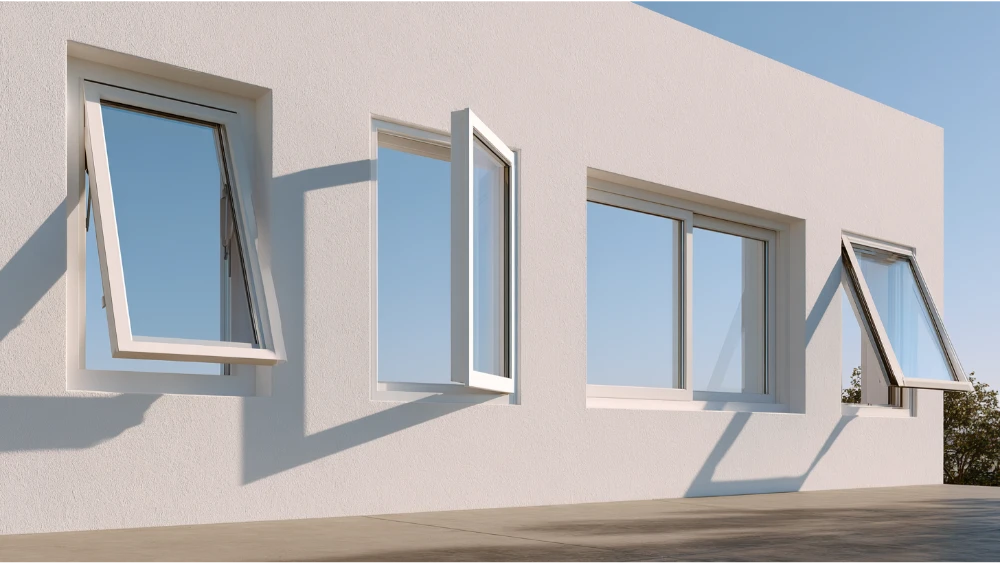
Each operable style opens differently, and that changes where it works. Here’s a quick side-by-side of the awning window against casement windows and other windows:
| Style | How It Opens | Best For | Sealing / Clearance Notes |
|---|---|---|---|
| Awning | Top-hinged, swings out from the bottom | Bathrooms, kitchens, high walls, rain-prone spots | Tight compression seal; needs outward clearance |
| Casement | Side-hinged, opens outward like a door | Wide openings, hard-to-reach spots over counters | Great airflow; needs more outward swing room |
| Slider | Moves horizontally along a track | Wide walls, easy operation | No outward swing; track sealing less tight |
| Hopper | Bottom-hinged, usually opens inward | Basements, small openings | Opens into the room; compact |
Choosing between an awning window and casement windows often comes down to opening size and orientation. Casement windows open wider for maximum airflow and full-height openings, while awning windows handle short, wide spaces and rain-resistant ventilation better. Both use the same crank hardware, and both seal tightly because they open outward against the frame. If you want a more traditional style, a double hung window (two sashes that slide up and down) is worth considering, though it won’t match the awning’s tight seal or its rain protection. Many traditional window styles trade a little sealing performance for that classic look. Fixed windows, like a picture window, don’t open at all, so they trade ventilation for an unbroken view and maximum natural light.
Energy Efficiency: Energy Efficient Windows, Low Emissivity Low-E Options, and Double Hung Comparisons
Awning windows tend to perform well because of that compression seal. When the sash presses against the frame, there’s less room for air to sneak through, and that holds true even next to a double hung unit with sliding sashes. Casement windows share the same advantage. That’s a real benefit for energy efficiency, since heat gain and loss through windows accounts for 25 to 30 percent of a home’s heating and cooling energy use.
To compare energy efficient windows fairly, read the NFRC label. In plain terms:
- U-factor: how well the window keeps heat in. Lower is better.
- SHGC (Solar Heat Gain Coefficient): how much of the sun’s heat comes through. Lower means less unwanted heat.
- Air Leakage: how much air slips through the unit. Lower is tighter.
- VT (Visible Transmittance): how much natural light passes through.
Energy Star® certified windows are independently tested by the NFRC and matched to climate zones. Under Version 7.0, effective October 23, 2023, the Northern zone requires U-factor at or below 0.22 and SHGC at or above 0.17; North-Central needs U-factor at or below 0.25 and SHGC at or below 0.40; South-Central requires U-factor at or below 0.28 and SHGC at or below 0.23; and Southern needs U-factor at or below 0.32 and SHGC at or below 0.23. Air leakage must stay at or below 0.3 cfm/ft². A big driver of that performance is a low emissivity coating, often called a low-E coating, which reflects heat back toward its source while letting daylight through. Some packages step up to triple pane glass for even tighter performance in cold climates. Energy Star® reports these windows can cut heating and cooling costs by up to 13 percent on average nationwide, and note that a standard double-pane window without a low-E coating lets in roughly 75 percent of the sun’s heat. In Northern California, matching a window to Title 24 standards matters just as much as the raw ratings. And a great window only performs if it’s installed right.
Custom Sizing, Glass Options, and Privacy
Awning windows come in custom sizes, which is part of why they fit compact and high-wall spaces so well. The customization options for awning windows and finish choices are where you tune the window to the room:
- Low-E coatings use a low emissivity layer to reflect heat while letting light through.
- Argon gas fill between panes improves insulation, and each pane glass layer adds to the barrier.
- Obscure glass adds privacy for bathrooms and street-facing rooms.
- Tempered safety glass for wet areas or code-required spots.
- Screens, frame colors, and hardware finishes to match modern homes or classic ones.
We install Anlin awning windows factory-direct. The Anlin Coronado awning window features a top-hinged sash, crank operation, a BetterVue® screen, and a full set of glass options including obscure and tempered glass, plus a range of exterior colors. Depending on the glass package, Anlin publishes NFRC-tested U-factors from 0.25 to 0.28, SHGC from 0.11 to 0.18, and UV block from 95 to 99 percent. The right package depends on your climate and which way the window faces.
Code and Safety Checks Before You Choose
Windows carry real building codes and safety rules, and they vary by location. The figures below come from the 2024 IRC model code. Your local adopted code and amendments may differ, so treat this as guidance and let a professional verify what applies to your home.
For emergency escape and rescue openings, the model code generally calls for:
- Minimum net clear opening width of 20 inches
- Minimum net clear opening height of 24 inches
- Minimum net clear opening area of 5.7 square feet (5.0 for grade-floor openings)
- Bottom of the clear opening no more than 44 inches above the floor
Because awning windows open outward from the bottom and often have a limited clear opening, they’re frequently not the first choice for egress. Any bedroom or basement application needs to be checked against local code and the product’s clear-opening data. Fall protection rules matter too, especially on upper floors: certain operable windows either can’t allow a 4-inch sphere through the largest opening or must use opening control devices meeting ASTM F2090. And near a tub, shower, or spa, glazing within 60 inches of the water’s edge is generally treated as hazardous and requires safety glass. This is exactly where our Northern California code and Title 24 knowledge helps you avoid costly mistakes.
What Affects Awning Window Cost?
There’s no single price for awning windows, because the cost depends on your specific project. The main drivers include:
- Window size and how many you’re replacing
- Frame material and finish
- Glass package (Low-E, argon, obscure, tempered)
- Custom exterior color
- Retrofit vs. full-frame installation
- Accessibility of the opening, including any exterior clearance needed for the swing
- Code requirements for the location
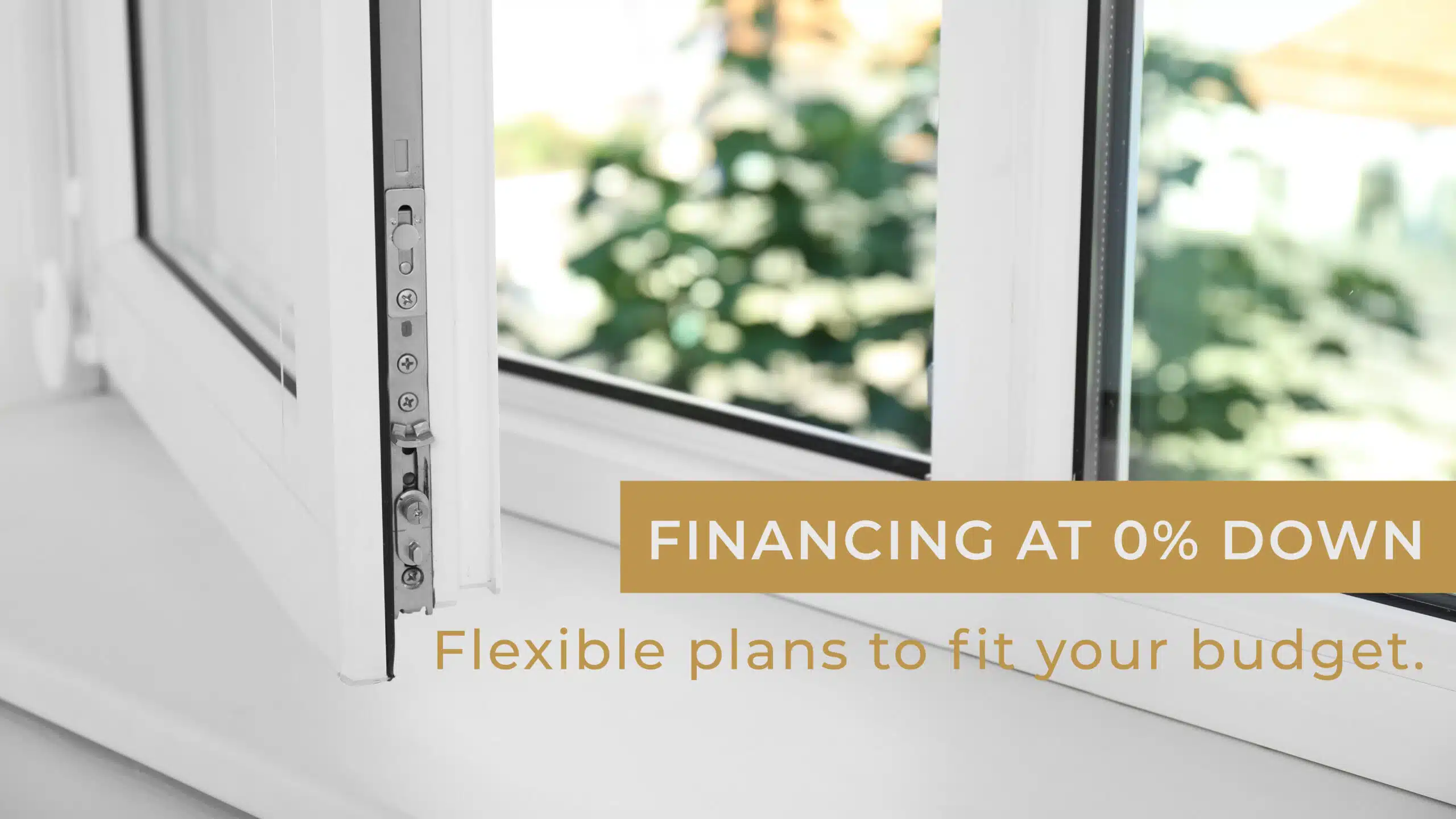
High-performance windows are often built to order, so plan for delivery of roughly 6 to 8 weeks, and sometimes up to 12. We don’t quote generic averages, because they rarely match a custom, professionally installed window. Instead, we give you a real number with a free estimate. If budget is the barrier, 0% APR financing can spread the cost out, with terms reviewed during your consultation and offered on approved credit. Quality shouldn’t be out of reach.
How to Decide If Awning Windows Are Right for Your Home
Run through this quick checklist. If you answer yes to most of these, awning windows are likely a strong fit:
- Do you want ventilation and privacy in the same window?
- Is there clearance outside so the sash can swing out?
- Is this window required for emergency egress? (If yes, verify carefully.)
- Is the spot near a tub or shower where safety glass matters?
- Is energy efficiency a priority?
- Do you want simple, low-maintenance crank operation?
- Do you need a clear view, or a higher placement for privacy?
Still unsure? That’s normal, and it’s what a consultation is for. We’ll look at each opening and tell you honestly whether an awning window, casement windows, or another of the other styles fits your home’s architecture and the room in question, whether that’s a bathroom, a bedroom, or other spaces.
Why Professional Installation Matters
Even the best window underperforms if it’s installed poorly. Precise measurement, proper flashing, sealing, and weatherproofing are what turn a good product into a tight, lasting window that suits both modern and traditional homes. Choosing the right glass options for your climate and code is part of that work too.
With 17+ years of experience, we handle awning window installation factory-direct and keep the process simple. Most window and door installations take one to two days, depending on project size, and we finish with a walkthrough so you know the job was done right. Your protection comes in two parts, and we keep them clear. The Anlin Limited Double Lifetime Warranty covers the vinyl, glass, hardware, and even accidental glass breakage. Separately, every Elevate installation carries our 10-year labor warranty on the workmanship. Our support doesn’t end after installation, so you’re not left wondering who to call.
Get a Free Estimate on Awning Windows
Ready to see if awning windows fit your home? Book a free consultation and we’ll give you a straightforward estimate with no commitment required. If you’d rather start small, our online window cost estimator answers a few quick questions to get you moving. When you’re ready to talk it through, call us at (916) 202-2282. Let’s get your project started.